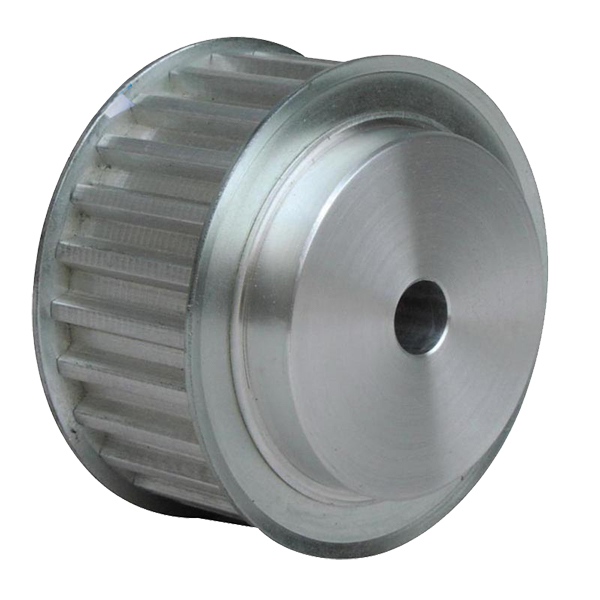
Taper Bore Timing Pulley Price and Industrial Selection Guide
When engineering precision power transmission systems, the selection of a taper bore timing pulley often determines the operational efficiency and maintenance cycle of the entire assembly. Unlike standard bore pulleys, the taper bore design allows for simplified installation and precise axial positioning, making it a preferred choice for high-torque applications in industrial machinery. For procurement managers and engineers, understanding the balance between material durability and the total cost of ownership is critical to avoiding premature wear and unplanned downtime.
Depending on the specific load requirements, these components are typically manufactured from high-grade steel or cast iron to ensure structural integrity. Whether you are integrating these into windmill generators or complex food processing machinery, the interaction between the pulley's tooth profile and the timing belt must be seamless to prevent slippage and ensure synchronized motion. This guide examines the technical specifications and procurement factors that influence the overall timing pulley price and long-term performance.

Engineering Fundamentals of Taper Bore Timing Pulleys and Their Design Logic
The primary advantage of a taper bore timing pulley lies in its mounting mechanism. By utilizing a tapered interface, the pulley can be securely locked onto a shaft using a locking assembly, which eliminates the need for keyed shafts in many applications. This design not only reduces the time required for installation but also allows for easier removal during maintenance, significantly lowering labor costs over the machine's lifecycle.
In terms of material science, the choice between cast iron and steel is driven by the specific application environment. Cast iron is often selected for its excellent vibration damping properties and cost-effectiveness in heavy-duty, lower-speed environments. Steel, conversely, is employed when higher tensile strength and resistance to impact are required, such as in mining equipment or heavy agricultural machinery. The precision of the tooth profile is paramount; any deviation can lead to increased noise, vibration, and accelerated belt wear.
Modern manufacturing processes, including those used by HeBei Oriental Industry Co., Ltd., ensure that the taper angle is consistent across production batches. This consistency is vital for ensuring that locking elements fit perfectly, providing a secure grip that can withstand significant radial loads without slipping, which is a common failure point in lower-quality alternatives.

Optimizing Performance for Heavy-Duty Industrial Applications
Taper bore pulleys are indispensable in sectors where synchronization is non-negotiable. In windmill generators, for instance, the pulley must handle fluctuating loads while maintaining strict timing to ensure electrical efficiency. Similarly, in the agricultural sector, OEM machinery relies on these components to drive complex mechanisms under harsh, dusty conditions where reliability is the highest priority.
Key performance indicators for these components include:
- Tooth Profile Accuracy: Ensures minimal backlash and maximum power transfer.
- Surface Treatment: Prevents corrosion in food-grade or outdoor environments.
- Bore Tolerance: Essential for the effectiveness of the taper-lock mechanism.
- Material Hardness: Determines the wear rate of the teeth under continuous high-tension operation.
By integrating these pulleys into a system, operators can achieve a more stable drive compared to traditional V-belt systems. The positive engagement of the timing teeth eliminates the risk of slippage, which is crucial for the precision required in food machines and automated packaging lines. When sourcing these parts, engineers must specify the exact bore series—such as H100, H150, H200, or H300—to ensure compatibility with the existing shaft diameters and locking hardware.
Procurement Strategy: Evaluating Material Quality vs. Long-Term Value
From a commercial perspective, the initial purchase price is only one part of the equation. A lower-cost pulley made from inferior alloys may seem attractive initially but often leads to higher expenses due to frequent replacements and system failures. Procurement professionals should evaluate the manufacturer's quality control systems, such as ISO9001 compliance, to ensure that the product will perform consistently under stress.
When requesting quotes, it is essential to define the material requirements clearly. Steel pulleys offer superior longevity in high-stress environments, whereas cast iron provides a balanced solution for general industrial use. Additionally, the ability of a supplier to provide customer-designed products is a significant advantage for companies developing specialized equipment for mining or environmental protection.
A reliable supply chain partner, like one with integrated foundry and machining capabilities, can offer better consistency. Having the casting process and the surface treatment workshop under one roof reduces the risk of quality variance and ensures that the final product meets the exact technical drawings provided by the client. This integrated approach is often the most effective way to optimize the total cost of acquisition.
Technical Specification Comparison for Taper Bore Pulley Series
| Model Series | Common Materials | Load Capacity | Typical Application |
|---|---|---|---|
| H100 Series | Steel / Cast Iron | Low to Medium | Light Automation / Food Machines |
| H150 Series | Steel / Cast Iron | Medium | Agricultural Equipment / Conveyors |
| H200 Series | High-Grade Steel | High | Mining Equipment / Heavy Pumps |
| H300 Series | High-Grade Steel | Very High | Windmill Generators / Industrial Presses |
| Custom Design | Application-Specific | Variable | OEM Specialized Machinery |
Manufacturing Excellence and Quality Assurance in Power Transmission
The reliability of a timing pulley is a direct result of the manufacturing process. Utilizing a professional foundry with a capacity of over 1000 tons per month allows for the production of consistent blanks, which are then precision-machined in dedicated workshops. This vertical integration is key to maintaining the strict tolerances required for taper bore components, where even a fraction of a millimeter can affect the locking force.
Quality control must be implemented at every stage: from the initial melt in the foundry to the final surface treatment. For components used in overseas markets, adherence to international standards is mandatory. The use of ISO9001 certified systems ensures that every pulley undergoes rigorous inspection for dimensional accuracy and material composition.
Moreover, the capacity for customized machining allows manufacturers to adapt pulleys for unique shaft configurations or specific material needs. This flexibility is particularly valuable for the environmental protection equipment sector, where standard off-the-shelf parts may not meet the specific operational requirements of the machinery. By focusing on precision machining and reliable casting, manufacturers can deliver components that significantly extend the mean time between failures (MTBF) for the end-user.
Future Trends in Precision Drive Components and Selection Guidance
As industrial automation moves toward higher speeds and greater precision, the demand for advanced transmission parts is increasing. We are seeing a shift toward hybrid materials and advanced surface coatings that reduce friction and increase wear resistance. For buyers, the focus is shifting from simply finding a low timing pulley price to identifying partners who can provide a total technical solution, including design optimization and material selection.
When selecting a supplier, consider the following checklist to ensure long-term operational success:
- Integrated Capabilities: Does the supplier handle casting, machining, and surface treatment internally?
- Industry Experience: Do they have a proven track record in your specific sector (e.g., agriculture, mining, or energy)?
- Certification: Is the production process governed by a recognized quality management system like ISO9001?
- Customization: Can they manufacture based on specific customer drawings and specialized material requirements?
Ultimately, the goal is to create a drive system that is efficient, quiet, and durable. By prioritizing technical compatibility and manufacturing quality over the lowest initial bid, companies can reduce their long-term maintenance overhead and improve the overall reliability of their industrial assets.
Technical FAQ: Taper Bore Timing Pulleys
What is the main advantage of a taper bore pulley over a standard bore pulley?
Taper bore pulleys allow for easier installation and removal without the need for keys or set screws. They use a locking assembly to create a powerful frictional grip on the shaft, ensuring precise axial positioning and reducing installation time.
When should I choose steel over cast iron for my timing pulley?
Steel should be chosen for applications involving high torque, heavy impact loads, or where maximum tensile strength is required. Cast iron is more suitable for applications requiring high vibration damping and where cost-effectiveness is prioritized for medium-duty loads.
How does the taper bore design affect the maintenance of industrial machinery?
It simplifies maintenance by allowing the pulley to be slid off the shaft quickly once the locking element is loosened. This reduces downtime during belt replacements or pulley upgrades compared to interference-fit or keyed pulleys.
Are taper bore timing pulleys compatible with all types of timing belts?
Compatibility depends on the tooth profile (e.g., HTD, T-series) and the pitch of the pulley. The taper bore refers to the mounting method on the shaft, not the belt interface, so you must match the pulley's tooth profile to your specific belt.
What factors most influence the cost of a custom-designed timing pulley?
The primary cost drivers are the material selected (e.g., specialized alloys), the complexity of the machining required, the total order volume, and any specific surface treatments needed for corrosion resistance.
How do I ensure the quality of pulleys sourced from an overseas manufacturer?
Verify that the manufacturer is ISO9001 certified, request material test reports, and ensure they have integrated production facilities (foundry and machining) to maintain tighter control over the manufacturing process.
Technical References and Industry Standards
- ISO Quality Management Standards for Manufacturing
- ASME Mechanical Engineering Standards
- NIST Precision Measurement and Tolerancing Guidelines
- AGMA Gear and Drive System Standards
For engineers and procurement specialists seeking high-performance power transmission solutions, selecting the right material and mounting system is key to operational longevity. HeBei Oriental Industry Co., Ltd. provides the technical expertise and manufacturing capacity to deliver precision taper bore pulleys tailored to your specific industrial requirements.
Related Technical Guides