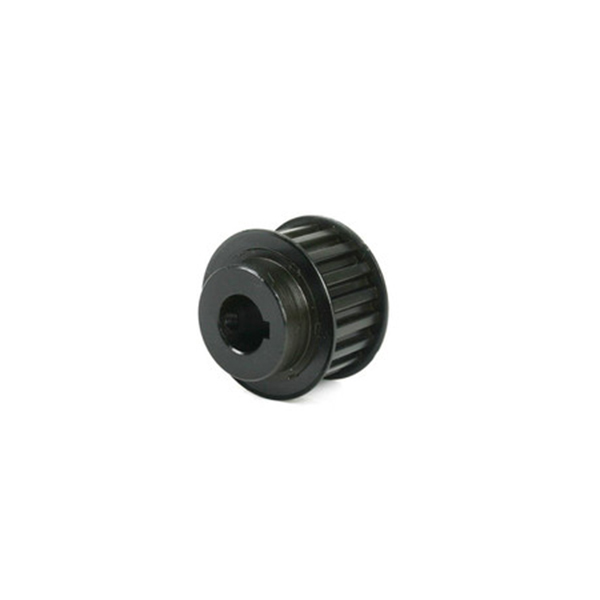
HTD Taper Bore Timing Pulley Quality and v belt pulley price
Achieving precise torque transmission in industrial machinery requires more than just selecting a component; it demands a strategic balance between material durability and geometric accuracy. For engineers overseeing power transmission systems, the transition to HTD (High Torque Drive) Taper Bore Timing Pulleys represents a shift toward reduced maintenance and increased operational efficiency. These components are engineered to eliminate the slippage common in traditional friction drives, ensuring that synchronization remains absolute even under fluctuating loads.
Whether integrating pulleys into windmill generators, heavy-duty agricultural equipment, or precision food processing machinery, the choice of pitch and belt width—ranging from 20mm to 85mm—directly impacts the system's power density. By utilizing high-grade steel or cast iron, these timing pulleys provide the structural integrity necessary for high-cycle environments where misalignment can lead to premature belt wear. Understanding the technical interplay between bore taper and tooth profile is essential for optimizing the longevity of any mechanical drive train.

Engineering Specifications of HTD 8M Taper Bore Timing Pulleys
The HTD 8M profile is specifically designed for high-torque applications where a curvilinear tooth shape distributes the load across the tooth flank, reducing stress concentrations. Unlike trapezoidal profiles, the 8mm pitch timing pulleys utilize a rounded tooth geometry that enhances the engagement between the belt and the pulley, significantly increasing the permissible torque capacity while minimizing noise levels during high-speed operation.
Material selection is a critical determinant of performance. Our pulleys are available in Steel for maximum wear resistance and high-tensile strength, and Cast Iron for applications requiring superior dampening properties and cost-effectiveness. The Taper Bore design further optimizes the installation process, allowing for precise axial positioning and a secure fit that simplifies the mounting and dismounting process without damaging the shaft.
- Pitch: Standard 8mm (8M) for high torque transmission.
- Belt Widths: Diverse options including 20mm, 30mm, 50mm, and 85mm to match specific load requirements.
- Materiality: Industrial-grade Steel and Cast Iron based on environment and load.
- Design: Taper bore for simplified installation and high concentricity.

Application Versatility Across Heavy Industry and Agriculture
The operational demands of different sectors dictate the specific configuration of the timing pulley. In the renewable energy sector, specifically within windmill generators, these pulleys must withstand constant torque fluctuations and environmental stress. The 8M-85 (85mm wide) configuration is often deployed here to maximize the contact surface area, ensuring that the immense energy captured by the blades is transferred efficiently to the generator shaft.
In contrast, agricultural machinery and food processing equipment often require a more compact footprint without sacrificing reliability. The 8M-20 and 8M-30 variants provide the necessary agility for conveyor systems and harvesting mechanisms. Because these environments often expose components to dust and organic debris, the use of high-grade cast iron ensures that the pulley remains resistant to surface erosion while maintaining the precise tooth geometry required for synchronization.
Beyond standard sizes, the ability to implement customer-designed products allows for the integration of pulleys into bespoke mining equipment. By tailoring the pulley diameter and width to the specific torque-to-speed ratio of the machine, engineers can prevent belt overheating and extend the overall service interval of the transmission system.
Critical Selection Factors for Power Transmission Components
When evaluating the total cost of ownership, the initial v belt pulley price is only one variable; the primary focus should be on the efficiency and durability of the drive system. A pulley that is improperly matched to the belt width or material requirement will lead to frequent downtime, which far outweighs any initial procurement savings. Technical buyers must analyze the peak torque loads and the radial forces acting on the shaft to determine if steel or cast iron is the appropriate substrate.
The transition to Taper Bore systems is particularly advantageous for operations that require frequent maintenance or part replacement. Standard keyed bores can often suffer from "wallowing" over time, leading to vibration and misalignment. Taper bores provide a uniform 360-degree grip on the shaft, which not only increases the torque transmission capability but also ensures that the pulley remains perfectly centered during high-RPM operation.
Furthermore, compatibility with the timing belt's material (such as polyurethane or neoprene) must be verified. The surface finish of the pulley teeth plays a vital role in reducing friction and heat buildup. Precision machining in a controlled workshop environment ensures that the 8M profile is consistent across all teeth, preventing localized wear and prolonging the life of the belt.
Technical Compatibility and Load Distribution Matrix
| Belt Width | Typical Application | Material Recommendation | Load Capacity |
|---|---|---|---|
| 20mm (8M-20) | Light-duty Conveyors | Steel / Cast Iron | Low to Medium |
| 30mm (8M-30) | Food Processing Machinery | Steel | Medium |
| 50mm (8M-50) | Agricultural Equipment | Cast Iron | Medium to High |
| 85mm (8M-85) | Windmill Generators | Steel | Very High |
| Custom Width | Mining Equipment | Application-Specific | Variable |
Manufacturing Excellence and Quality Control Standards
The reliability of a timing pulley is rooted in the precision of its manufacturing process. Utilizing an integrated production chain—from the foundry to the machining and surface treatment workshops—allows for rigorous oversight at every stage. The use of Lost Foam casting processes for complex parts ensures that the base geometry is accurate, reducing the amount of material removal required during the final machining phase and preserving the internal grain structure of the metal.
Adherence to the ISO9001 quality management system ensures that every pulley, whether a standard P22-8M-20 or a custom-designed component, meets strict dimensional tolerances. Quality control involves precision gauging of the tooth profile and the taper bore angle to ensure a seamless fit. This systematic approach minimizes the risk of vibration-induced failure, which is a common problem in poorly manufactured transmission parts.
Our capacity to produce over 1000 tons of castings per month allows us to maintain a consistent supply chain for both our own pulley production and for customers requiring raw casting parts. This vertical integration ensures that material purity is maintained, eliminating the risk of inclusions or voids in the cast iron that could lead to catastrophic failure under heavy industrial loads.
Future Trends in Mechanical Power Transmission
The industry is moving toward "smart" transmission systems where components are designed for maximum energy efficiency and minimum carbon footprints. In this context, the optimization of the HTD profile is crucial. By reducing the mass of the pulley through advanced engineering while maintaining structural rigidity, manufacturers can reduce the inertia of the drive system, leading to faster response times and lower energy consumption in start-stop applications.
We are also seeing an increased demand for hybrid materials and specialized surface treatments to combat corrosion in extreme environments, such as offshore wind farms or chemical processing plants. The integration of advanced surface treatment workshops allows for the application of coatings that protect the steel pulleys from oxidation without compromising the precision of the tooth engagement.
For procurement managers, the trend is shifting toward consolidated sourcing. Instead of buying individual parts, companies are looking for partners capable of supplying complete transmission assemblies—including sprockets, gears, and couplings. This approach reduces the risk of component incompatibility and streamlines the supply chain, ensuring that the entire power train is engineered to work as a single, cohesive unit.
Frequently Asked Questions on HTD Timing Pulleys
What is the primary advantage of a Taper Bore pulley over a standard bore?
Taper Bore pulleys allow for easier installation and removal without the need for precise machining of the shaft. They provide a secure, centered fit that distributes clamping force evenly, reducing the risk of shaft damage and improving concentricity during high-speed operation.
How do I choose between Steel and Cast Iron for an 8M timing pulley?
Steel is recommended for high-wear applications and where maximum tensile strength is required, such as in heavy generators. Cast Iron is ideal for applications requiring vibration dampening and where cost-efficiency is a priority, provided the peak loads are within the material's limits.
Can HTD 8M pulleys be used in food processing environments?
Yes, they are frequently used in food machinery due to their synchronization capabilities. However, it is recommended to use materials or surface treatments that are compatible with food safety standards and resistant to the cleaning chemicals used in those environments.
What determines the required belt width (20mm vs 85mm)?
The belt width is determined by the amount of torque that needs to be transmitted. Wider belts (like 85mm) provide a larger contact area, allowing for higher torque capacity and reducing the stress on individual teeth, which is essential for heavy industrial loads.
What is the significance of the 8mm pitch in the 8M designation?
The 8mm pitch refers to the distance from the center of one tooth to the center of the next. This specific pitch is designed for high-torque applications, offering a balance between power transmission capacity and pulley diameter efficiency.
Does HeBei Oriental Industry support custom designs for specialized machinery?
Yes, we specialize in supplying customer-designed products. Our engineering team can translate blueprints into tangible parts using our foundry and machining workshops to meet specific requirements for mining, agriculture, or energy equipment.
Technical References and Industry Standards
- ISO 9001 Quality Management Standards
- ASME Mechanical Engineering Standards
- AGMA Gear and Transmission Guidelines
- NIST Precision Measurement Standards
Selecting the right timing pulley is a critical decision that impacts the efficiency and lifespan of your entire mechanical system. By focusing on material integrity, precise tooth profiles, and the advantages of taper bore technology, you can ensure a reliable power transmission solution tailored to your specific industrial needs.
Related Transmission Solutions