
-
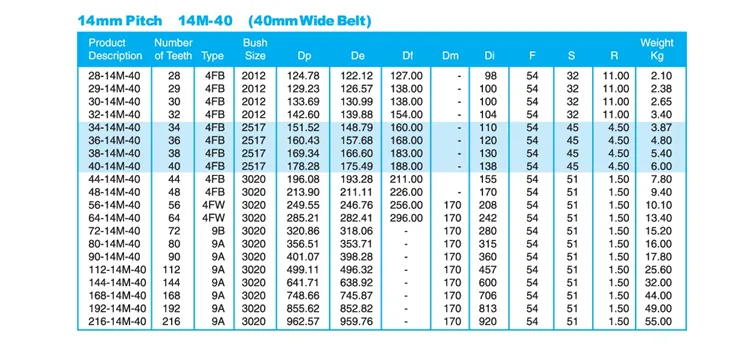
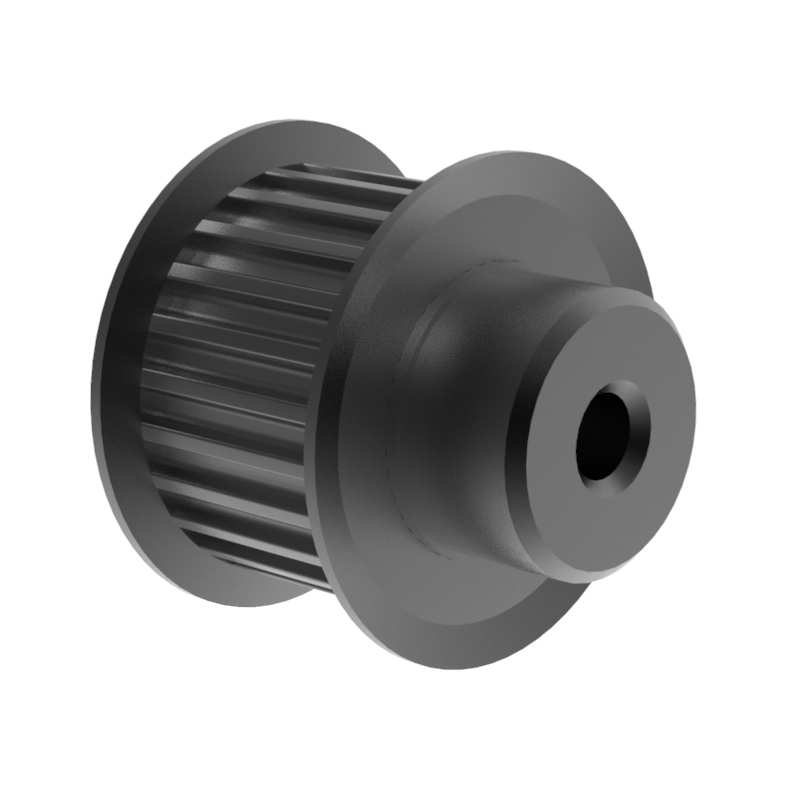 HTD 14M taper bore timing pulleys are engineered for heavy-duty and high-load applications. They offer superior power transmission, durability, and accurate synchronization. With easy installation and strong grip, they are ideal for demanding industrial machinery and drive systems.
 -
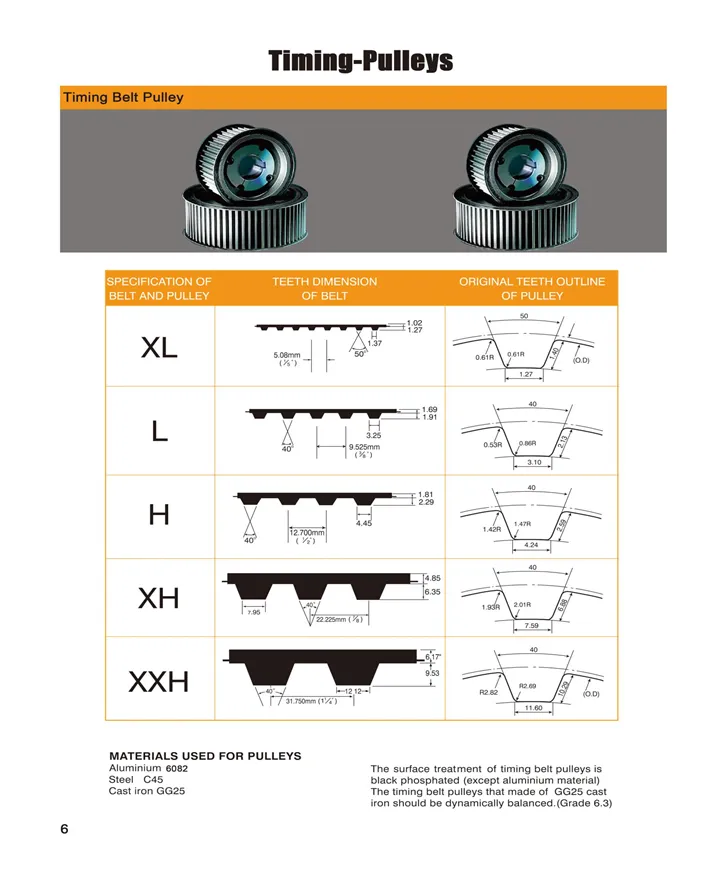
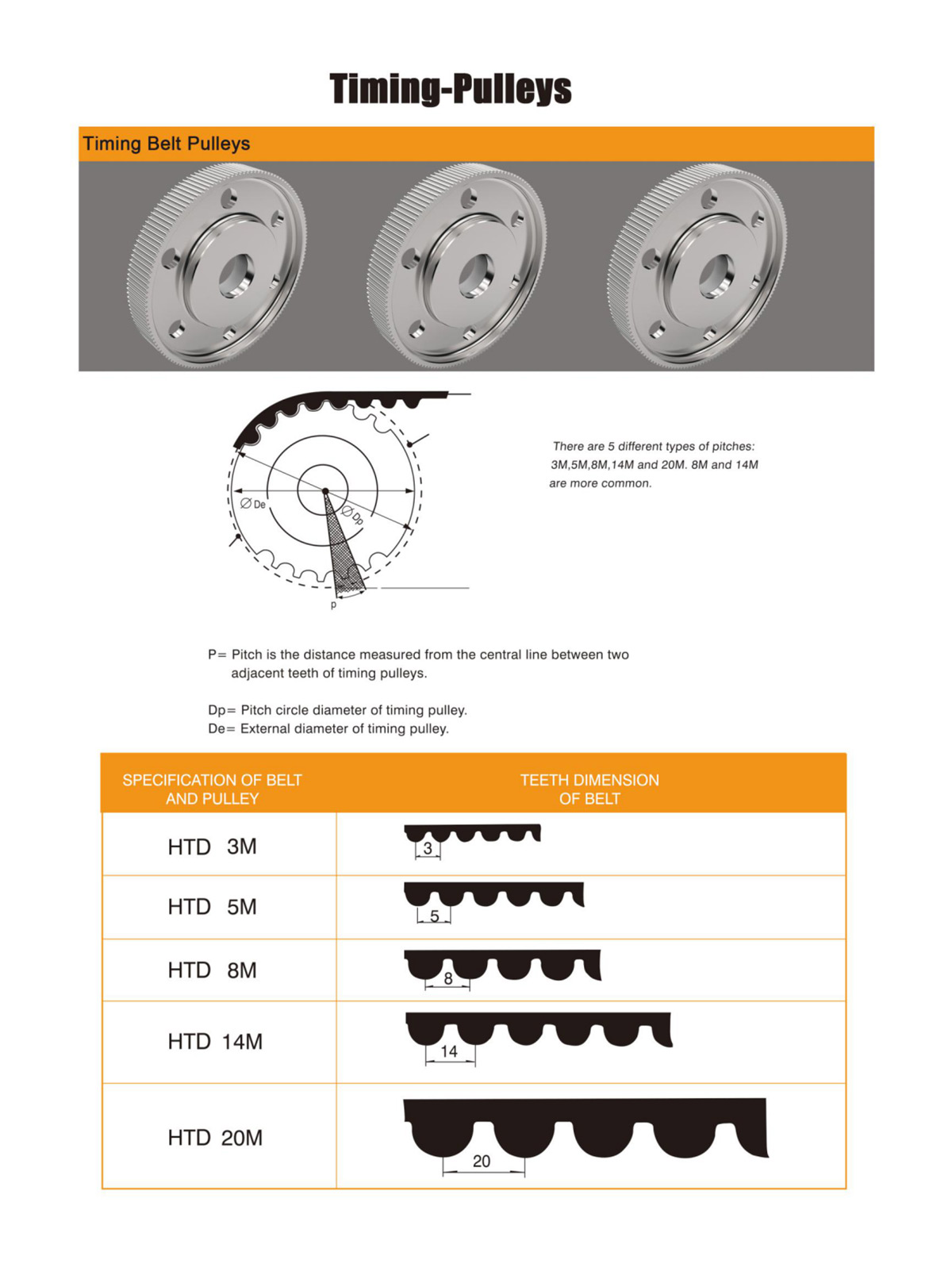
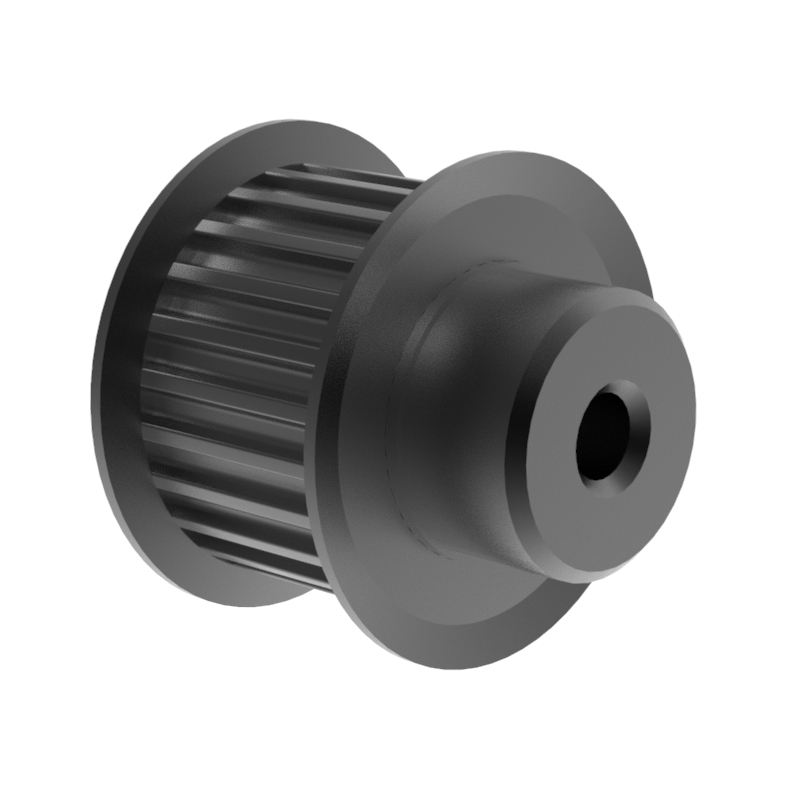 Universal timing-belt pulleys are designed for synchronous power transmission with precise positioning and no slippage. Compatible with various belt profiles, they ensure high efficiency and accuracy. Widely used in automation, robotics, and precision machinery, they offer reliable performance and long-lasting durability in demanding applications.
 -
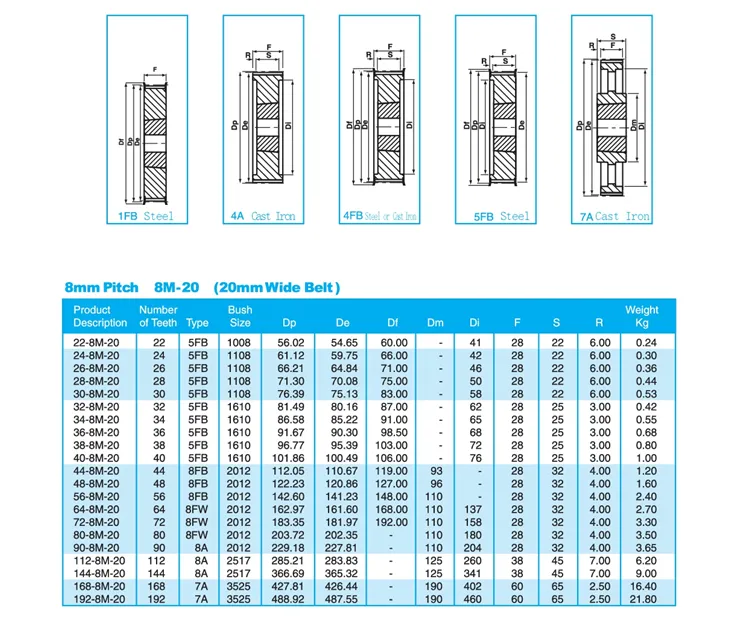
 HTD 8M taper bore timing pulleys are designed for high torque transmission and smooth operation. Their taper bore structure allows easy installation and secure shaft connection. Suitable for industrial applications, they provide precise motion control, reduced vibration, and long-lasting performance.
 -
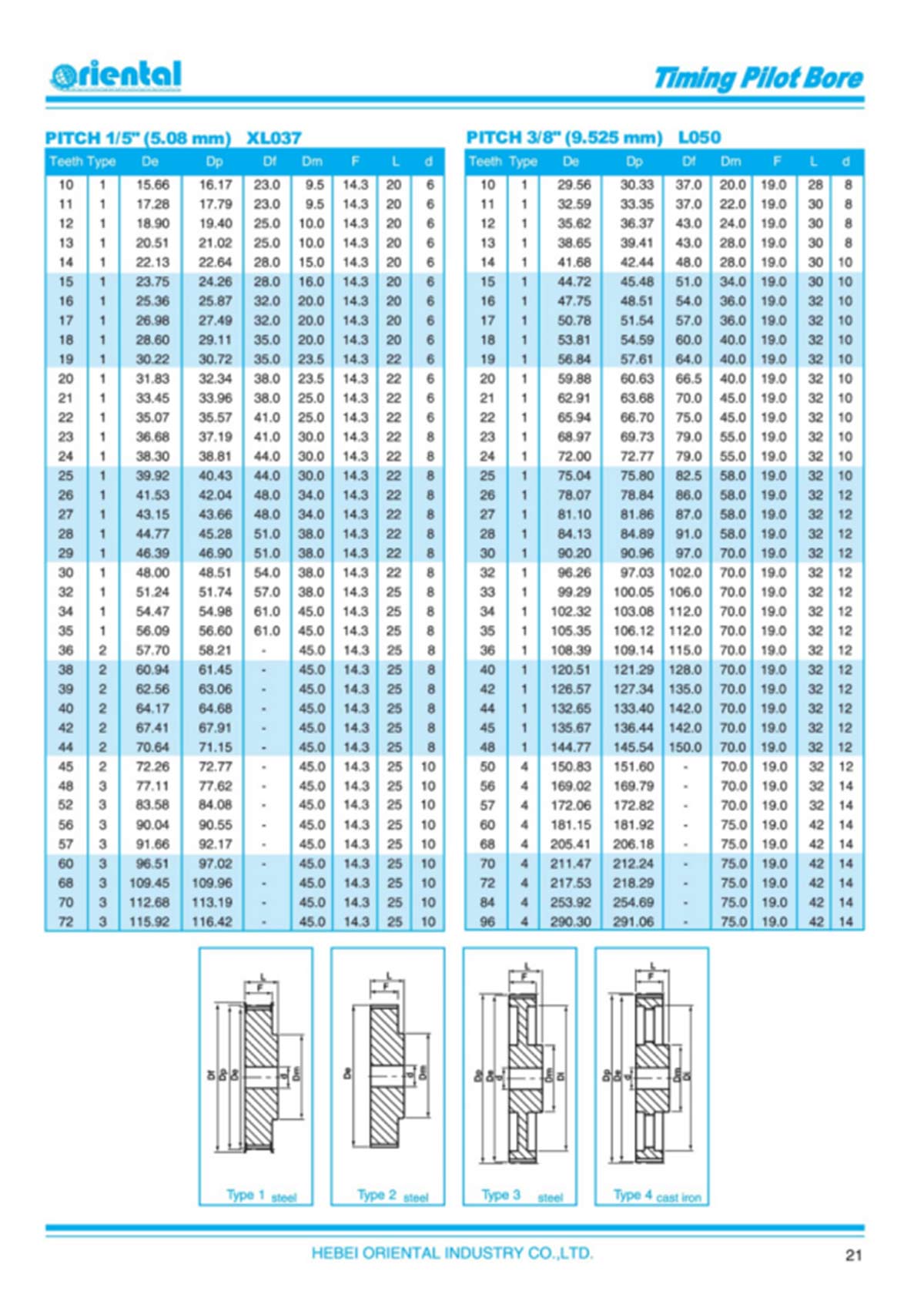
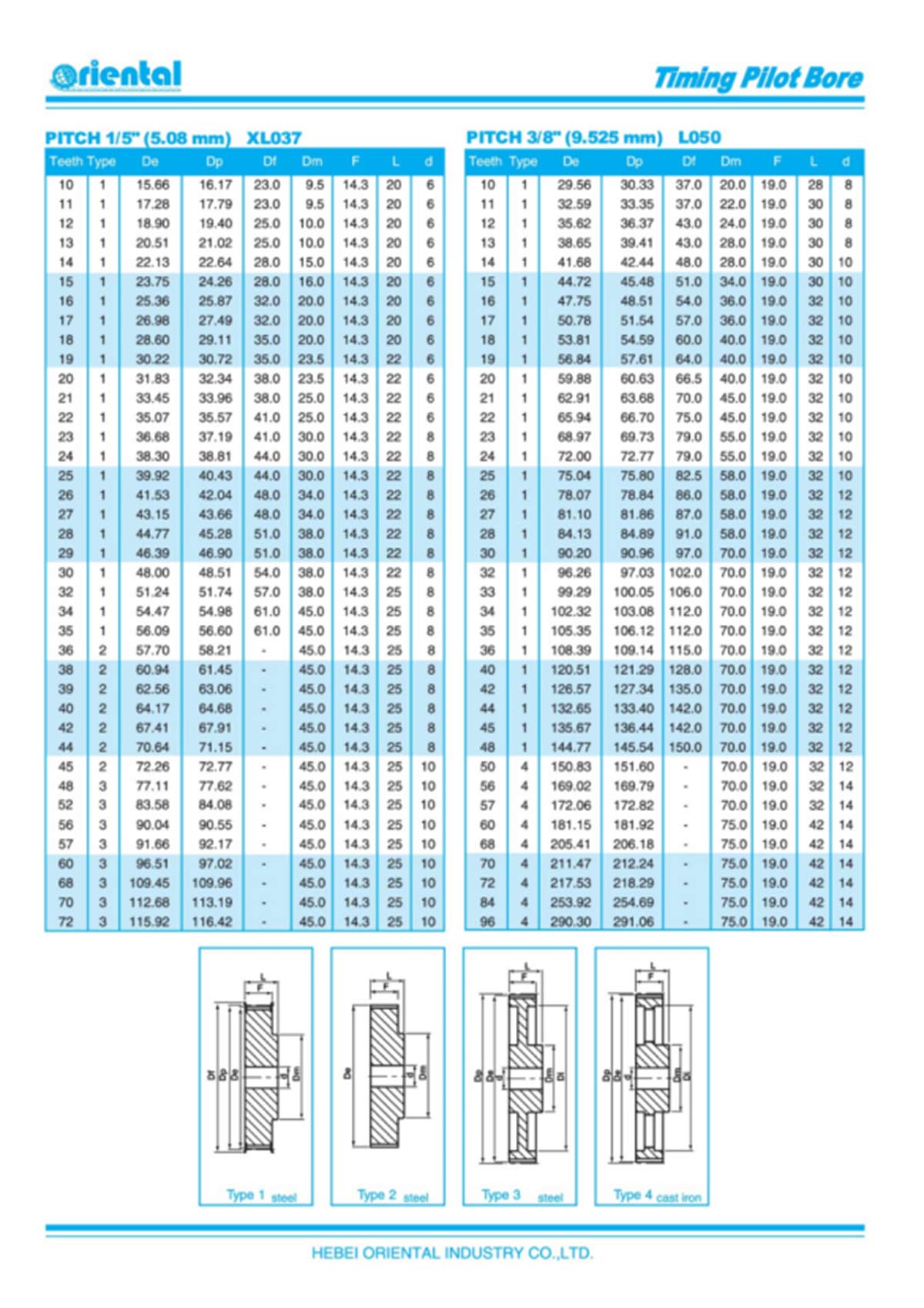
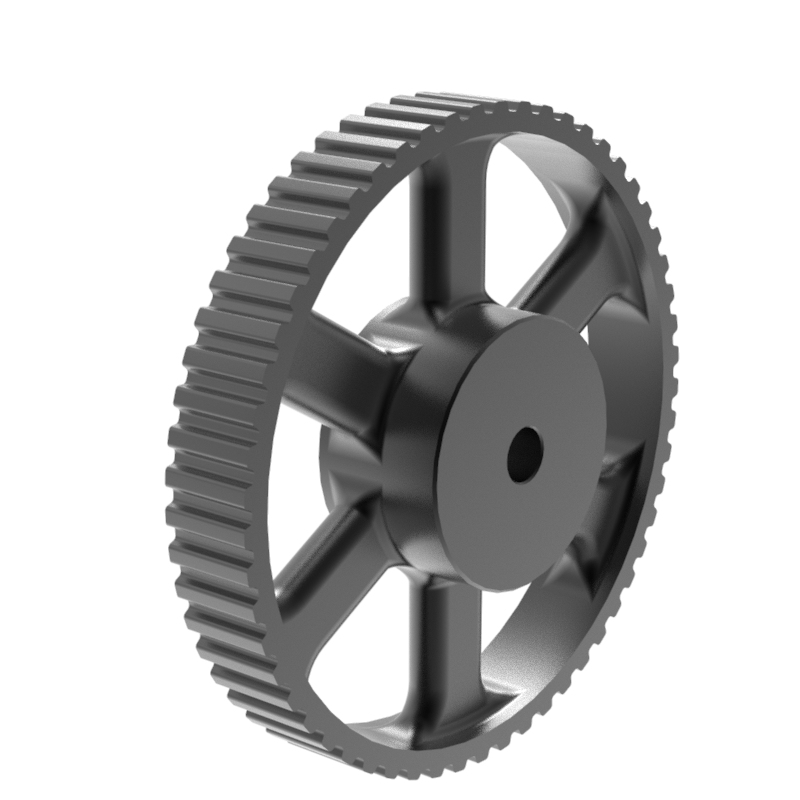 Pilot bore timing pulleys XL are designed for light to medium-duty applications requiring precise motion control. With customizable bore sizes, they offer flexibility and accurate belt engagement. These pulleys ensure efficient performance and are widely used in automation and mechanical systems.
 -
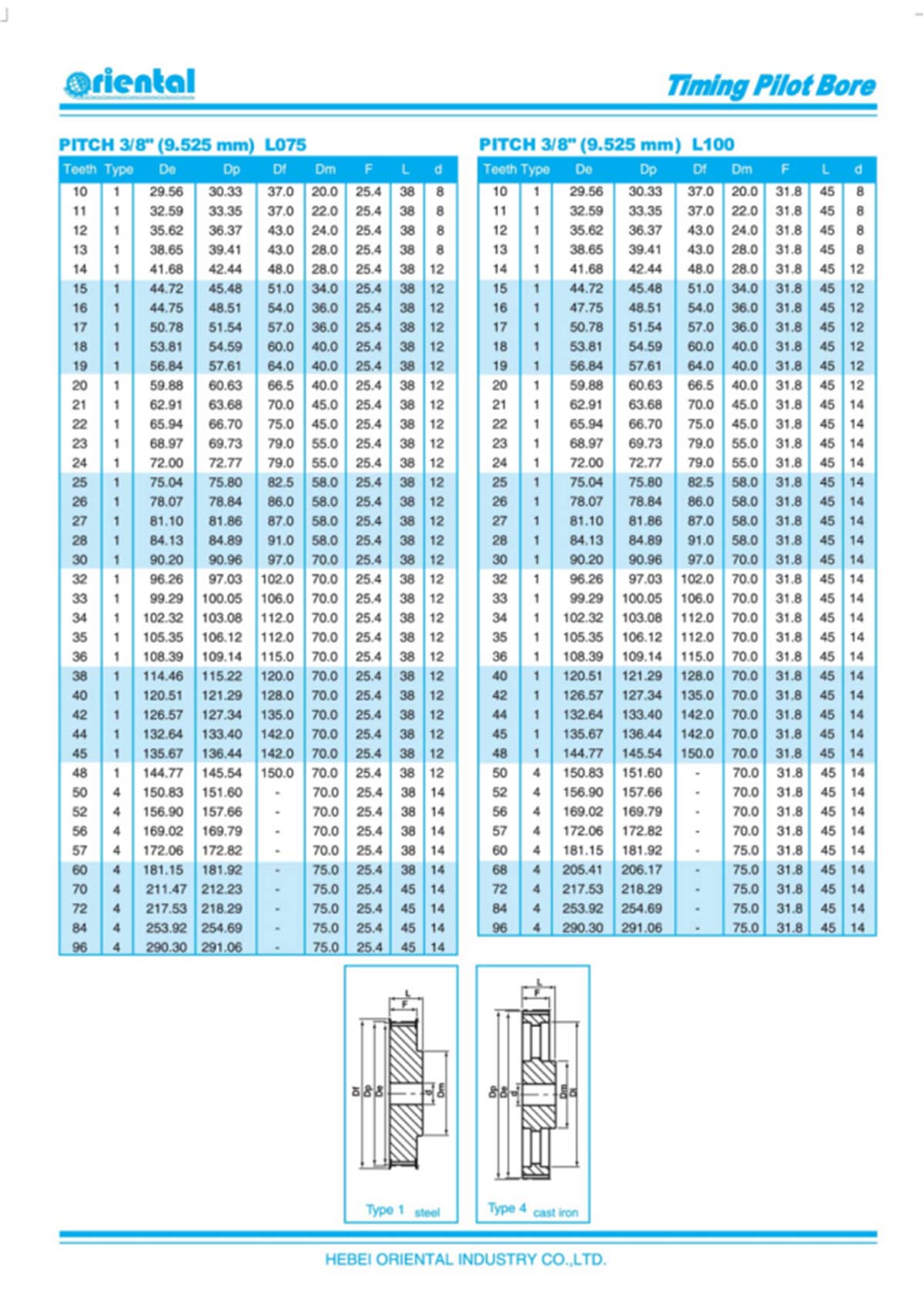
Pilot bore timing pulleys L feature a pre-machined bore for flexible customization and accurate shaft fitting. They ensure smooth synchronous transmission and reliable performance. Widely used in automation and machinery systems, they offer efficiency, durability, and easy integration.
-
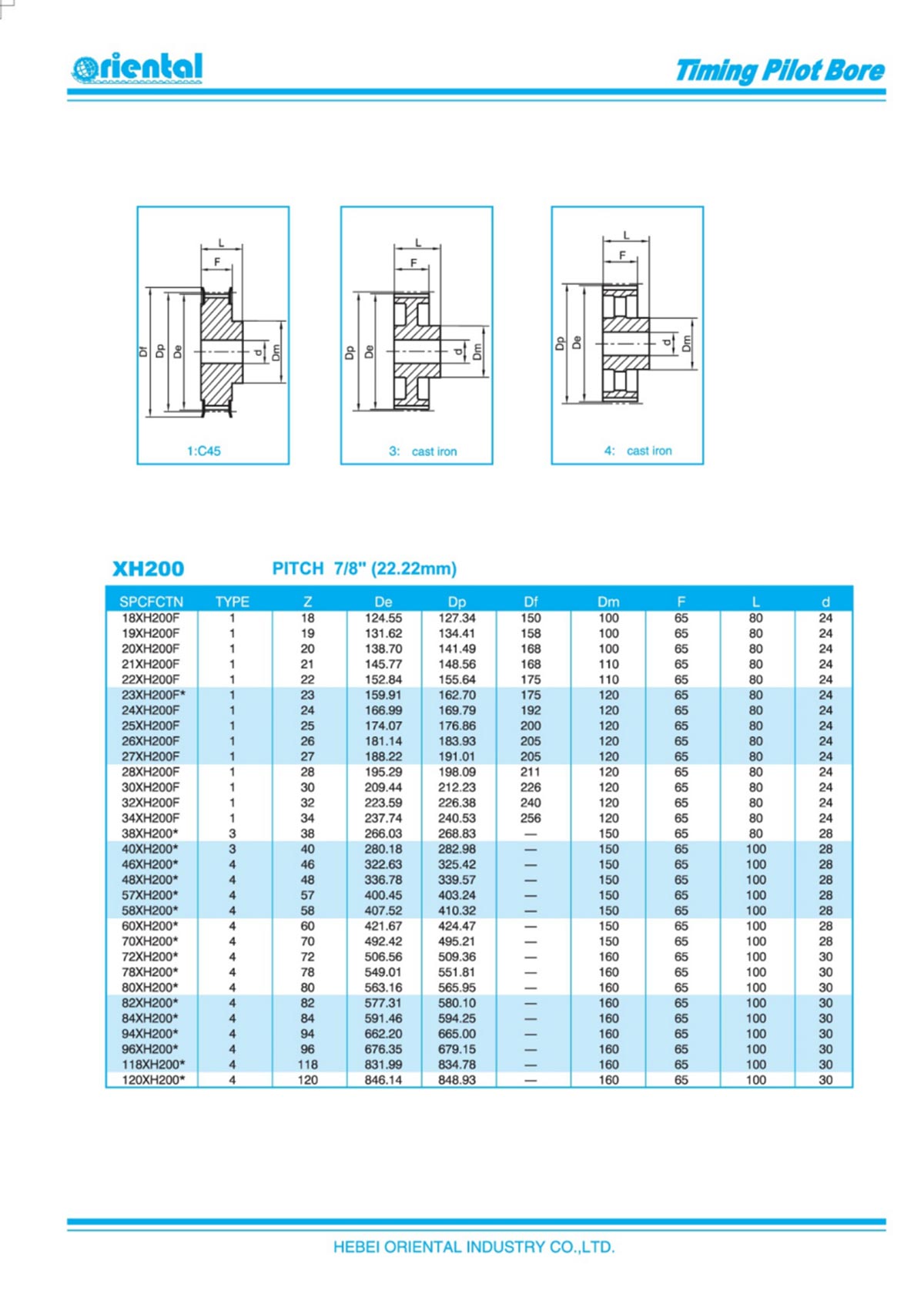
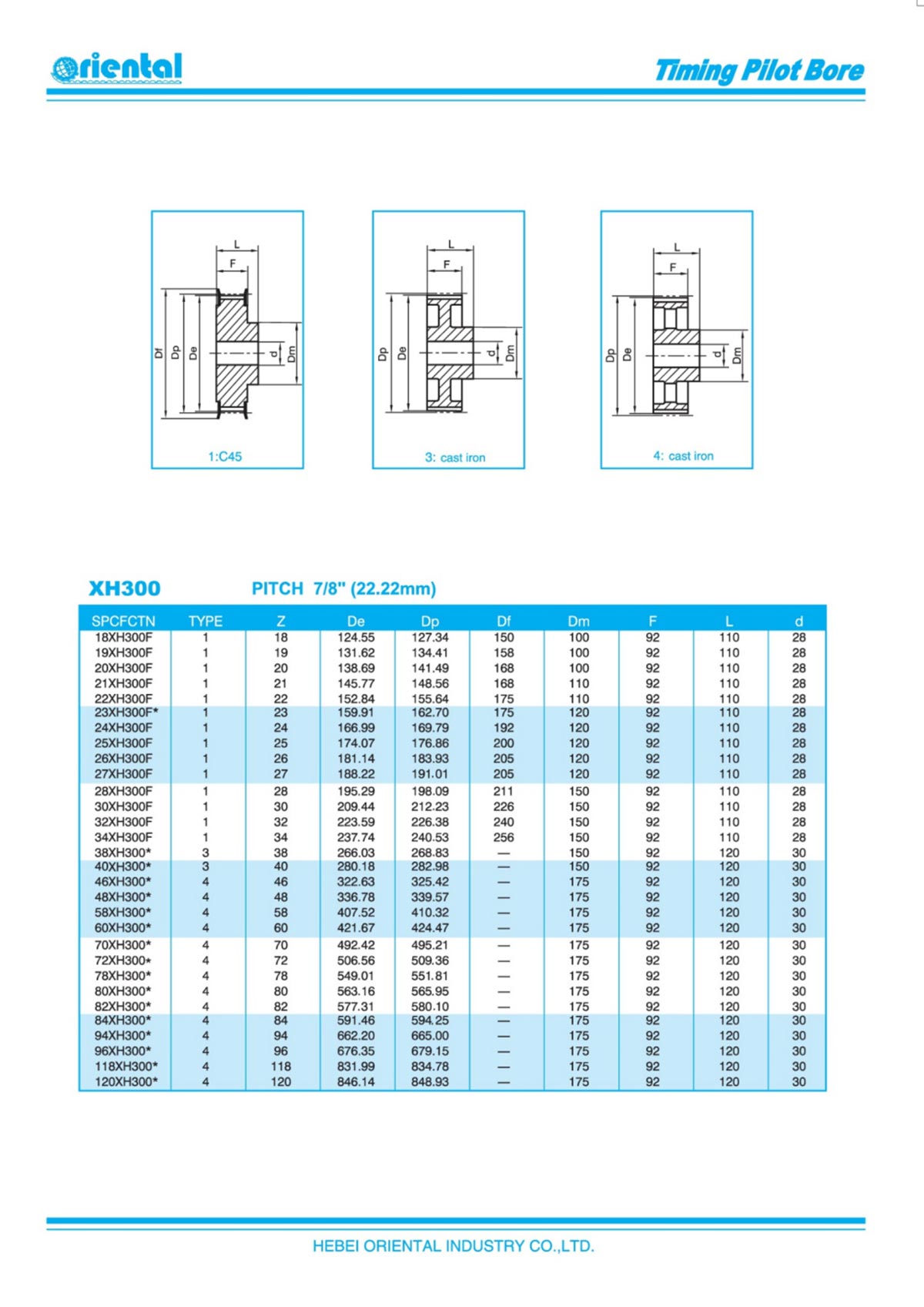
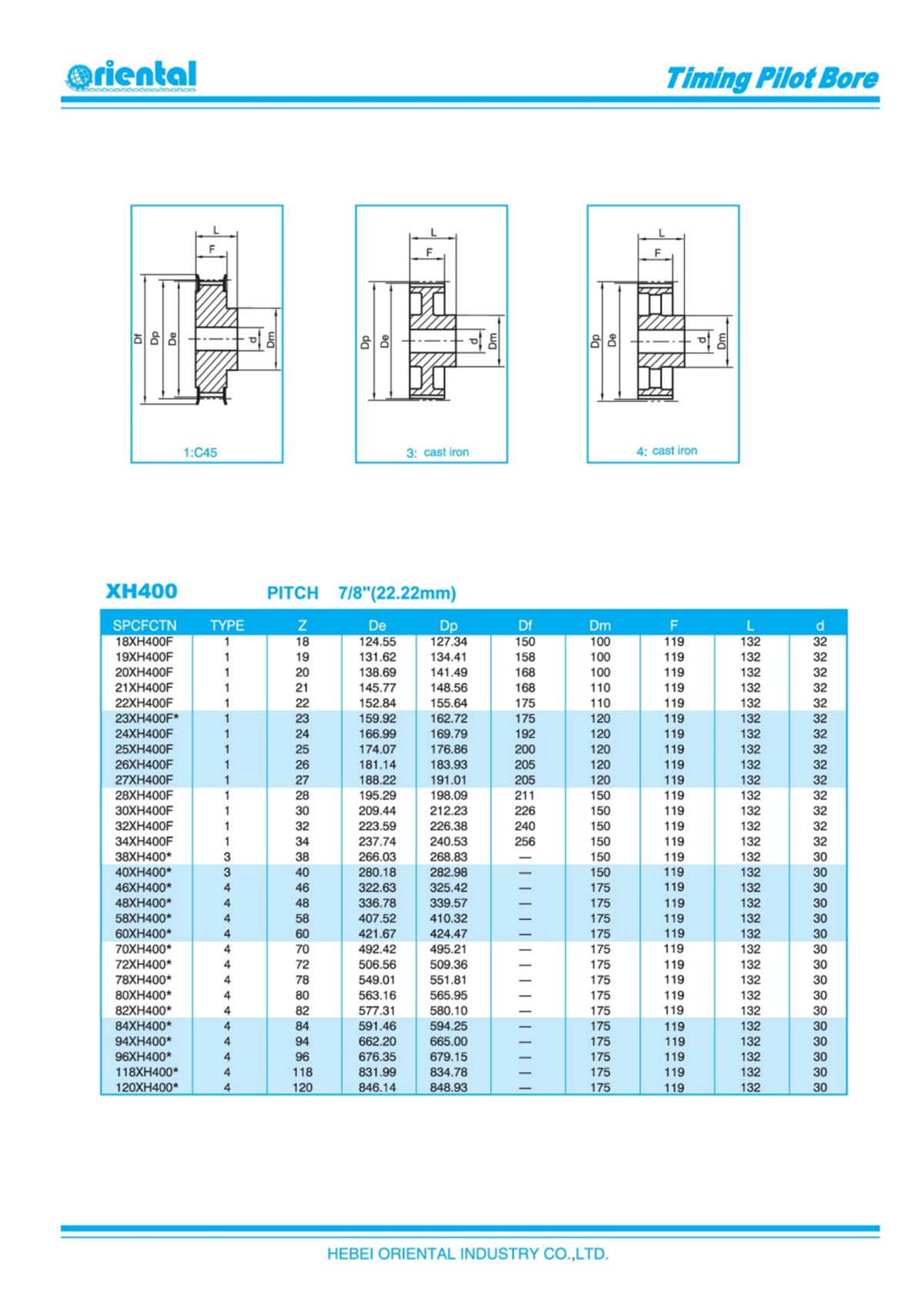
Pilot bore timing pulleys XH are designed for heavy-duty, high-torque applications and allow custom machining to fit specific shafts. They provide precise belt engagement, stable transmission, and high load capacity, making them ideal for demanding industrial and mechanical systems.
-
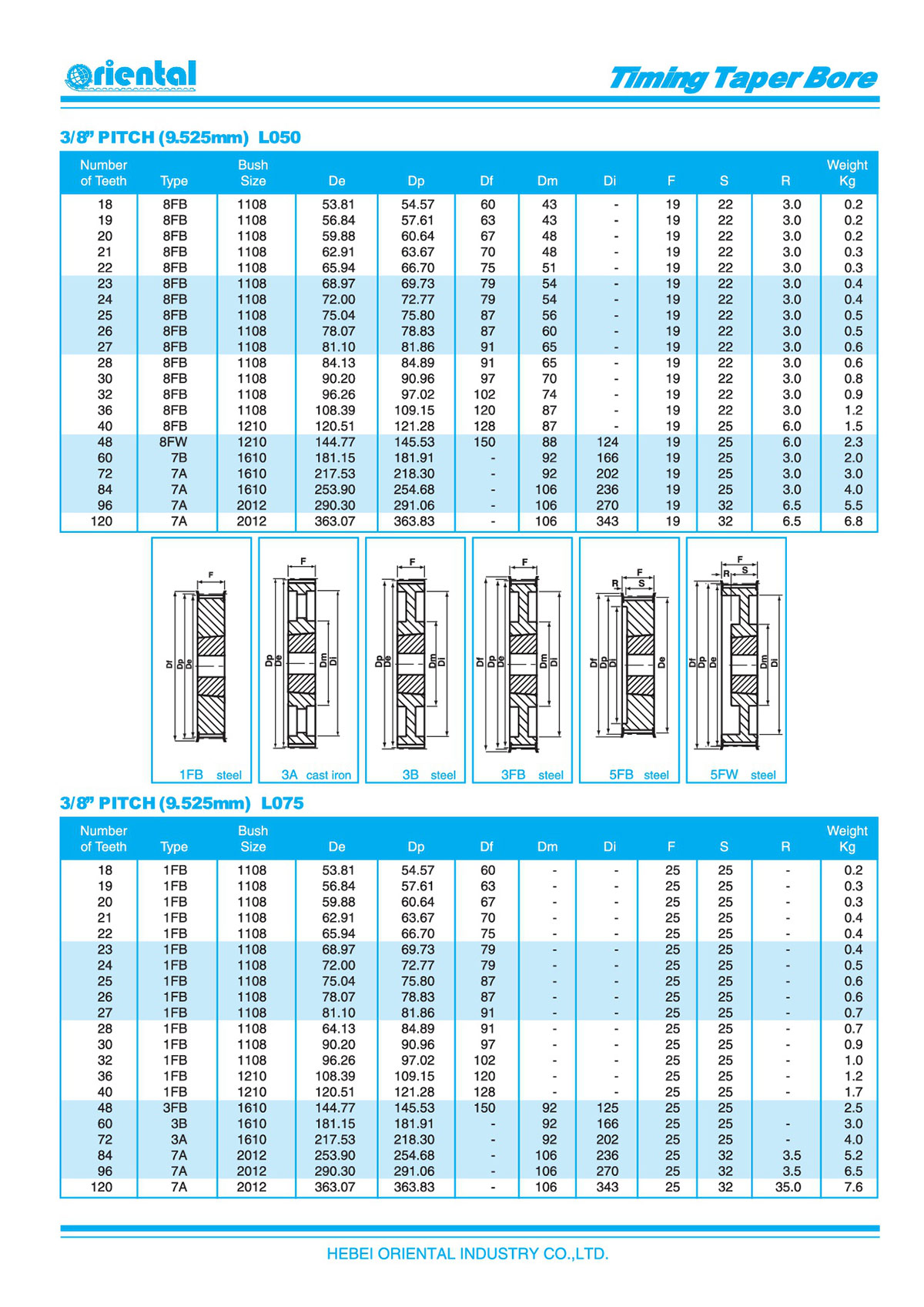
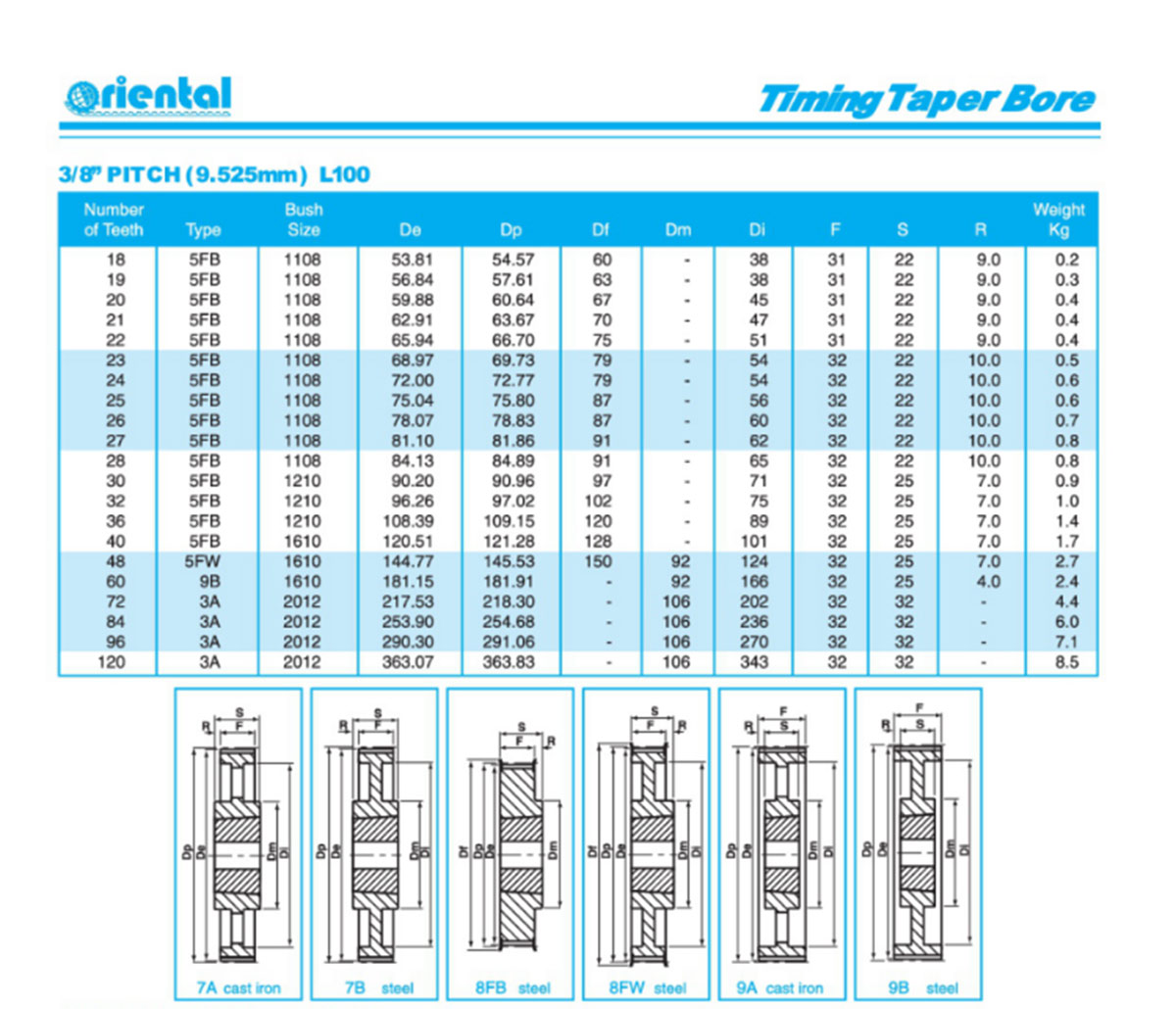
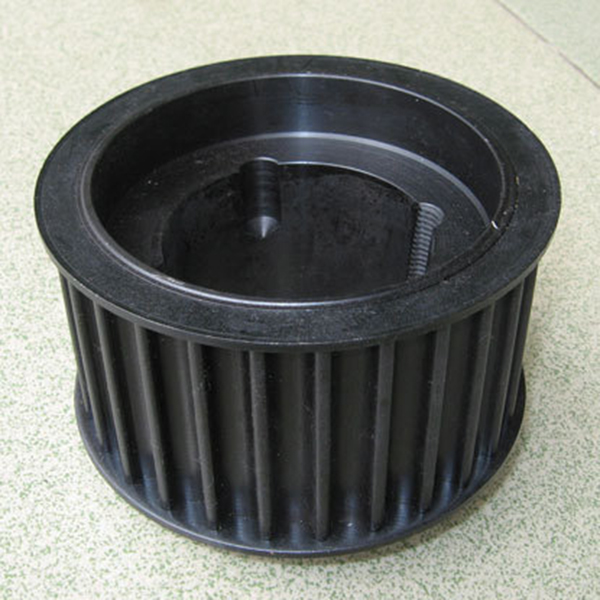 Taper bore timing pulleys L are designed for precise synchronous transmission with easy installation using taper bushes. They ensure accurate positioning, high efficiency, and reliable performance. Suitable for industrial machinery and automation systems, they offer durability, low maintenance, and long service life.
 -
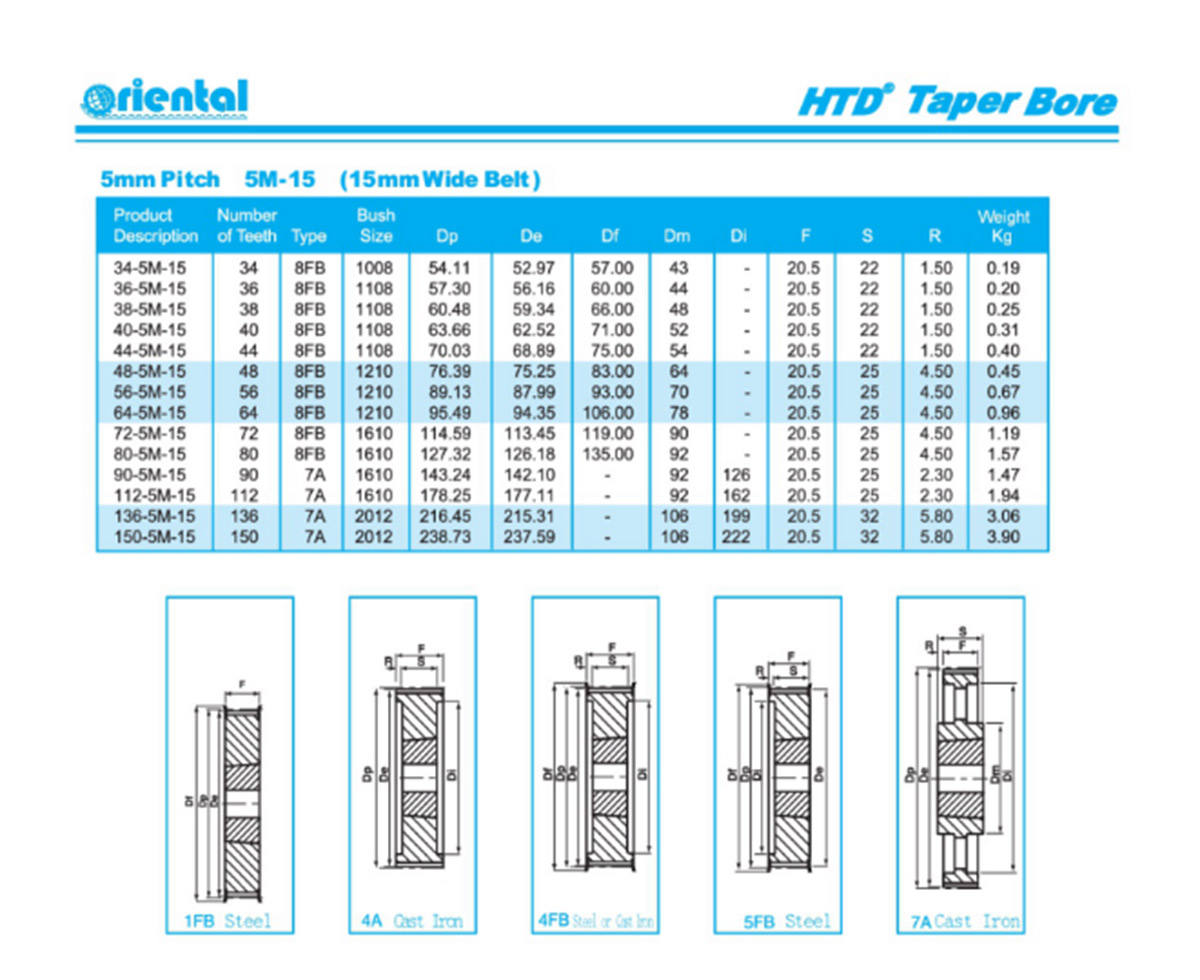
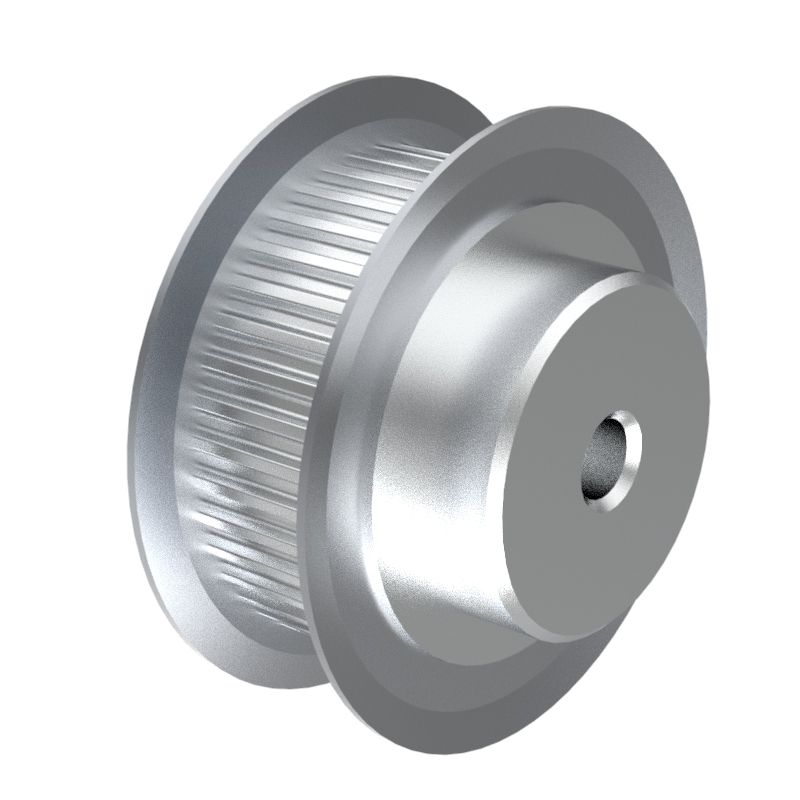 HTD 5M taper bore timing pulleys are engineered for compact and high-speed applications requiring precise motion control. They provide excellent power transmission efficiency and reduced vibration. Ideal for automation and machinery systems, these pulleys ensure smooth, reliable, and long-lasting performance.
 -
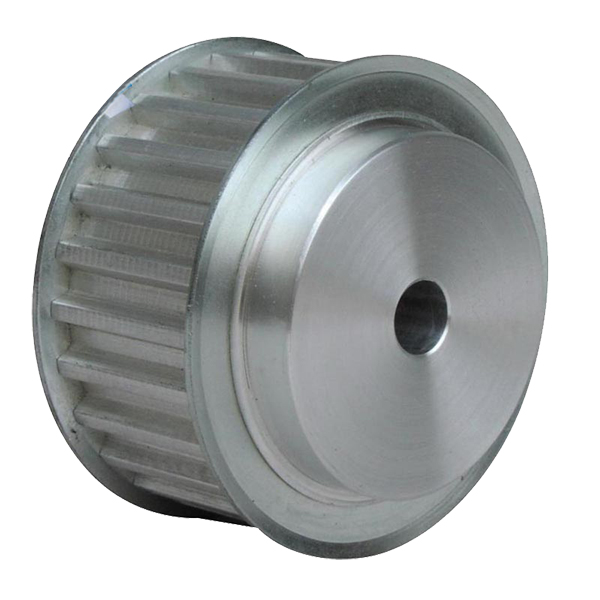 HTD taper bore timing pulleys are designed for high torque transmission with superior load capacity. Their taper bore structure ensures easy installation and secure fit. Widely used in heavy-duty and high-performance applications, they deliver accurate motion, reduced noise, and long service life.
 -
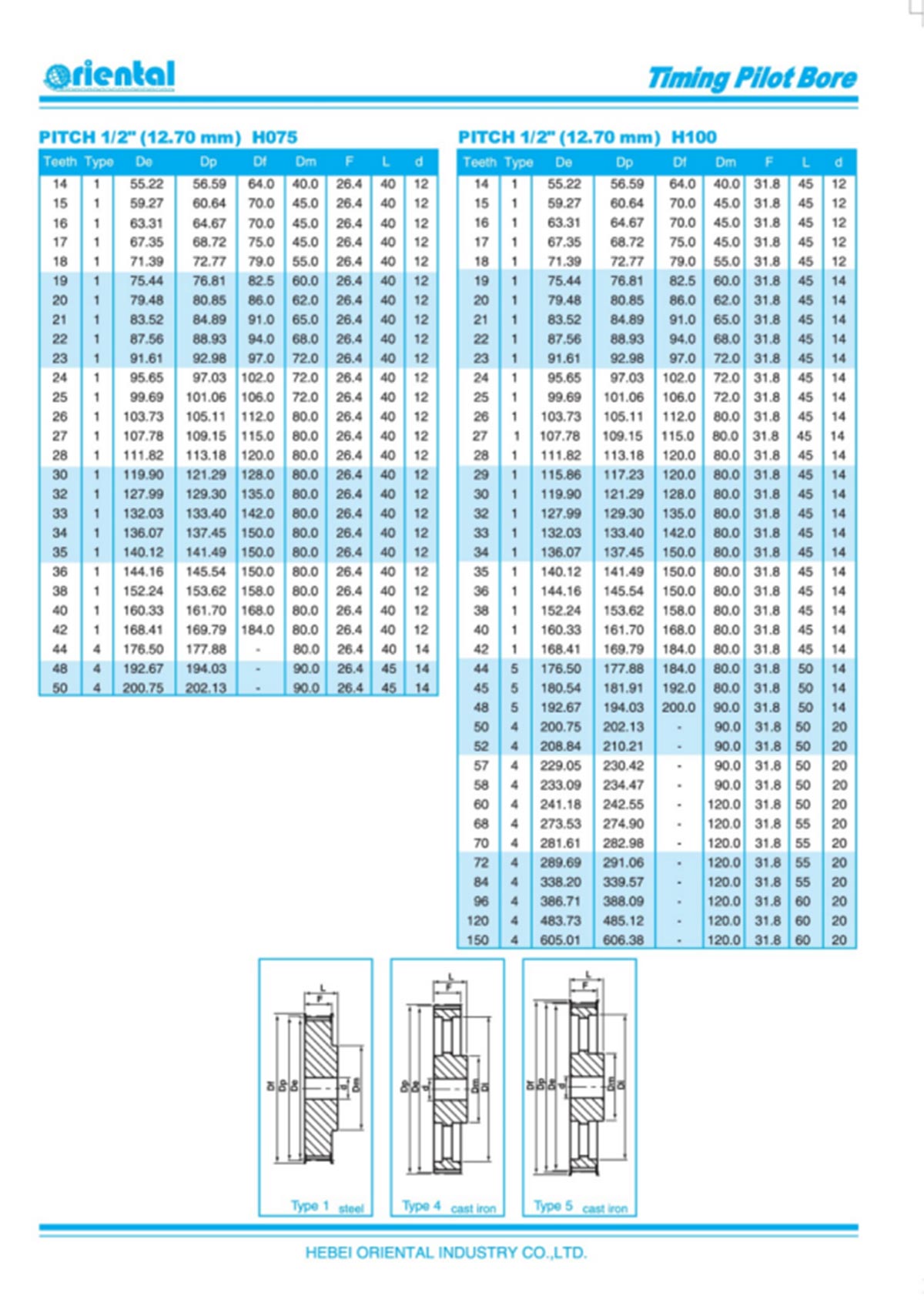
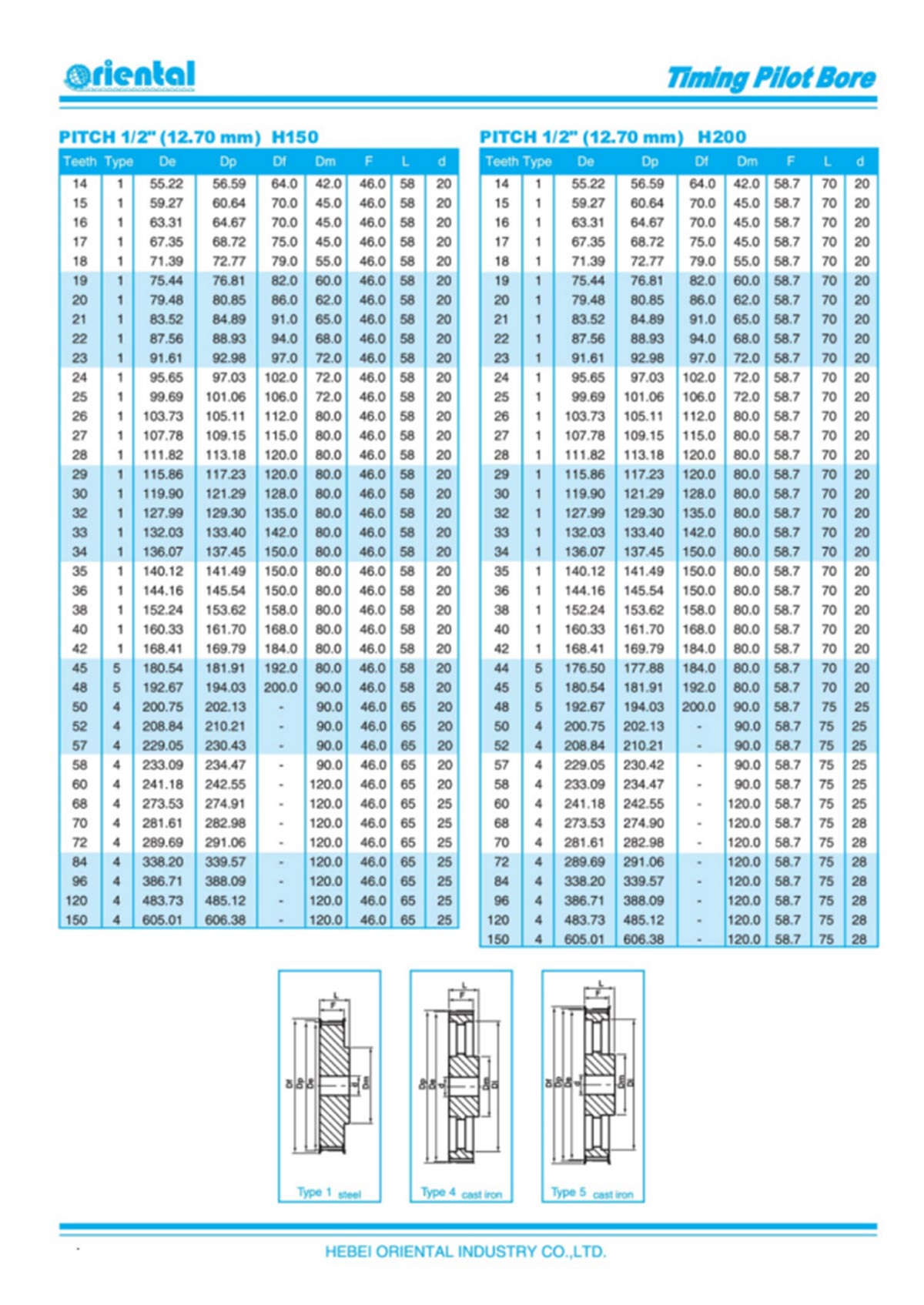
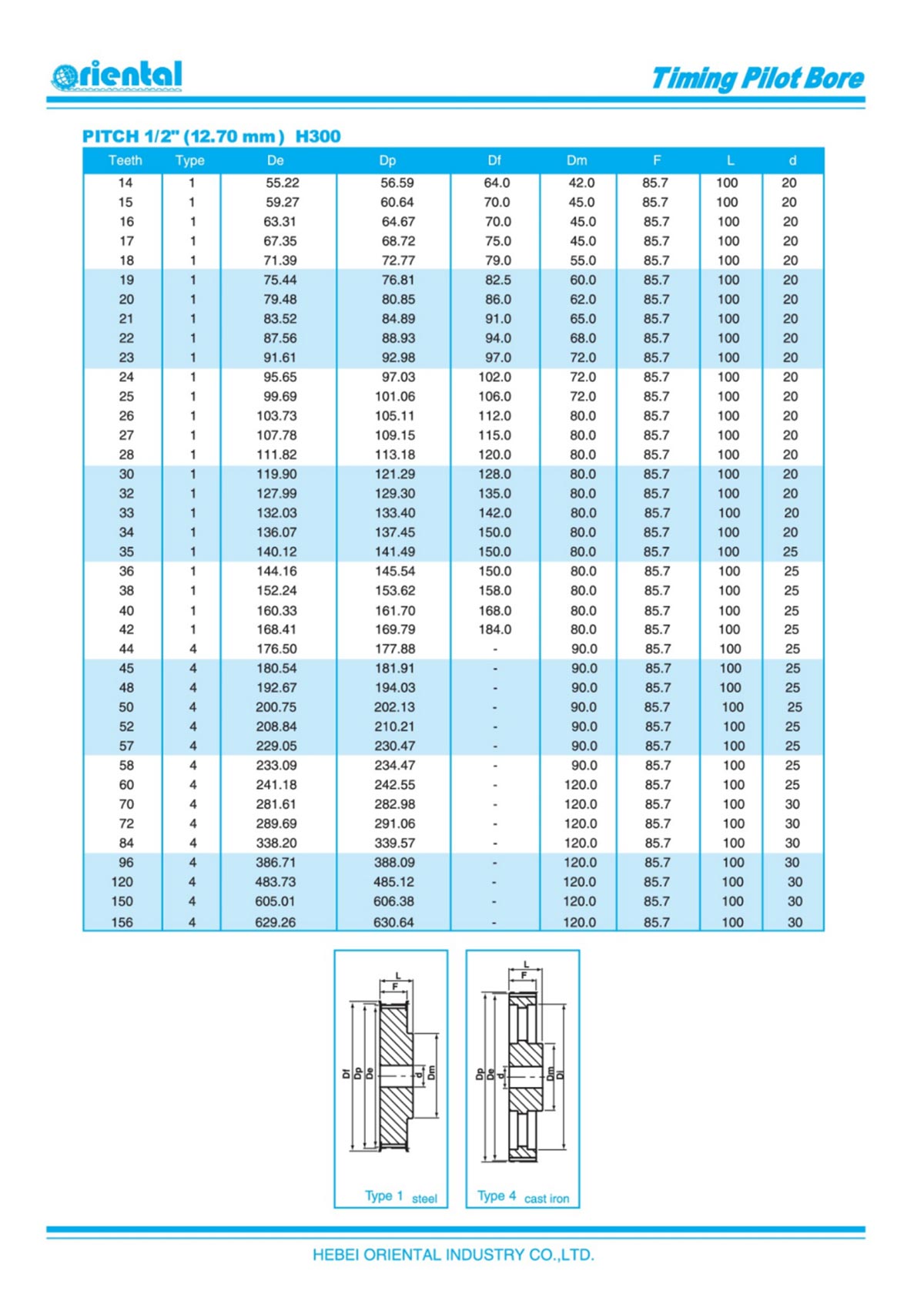
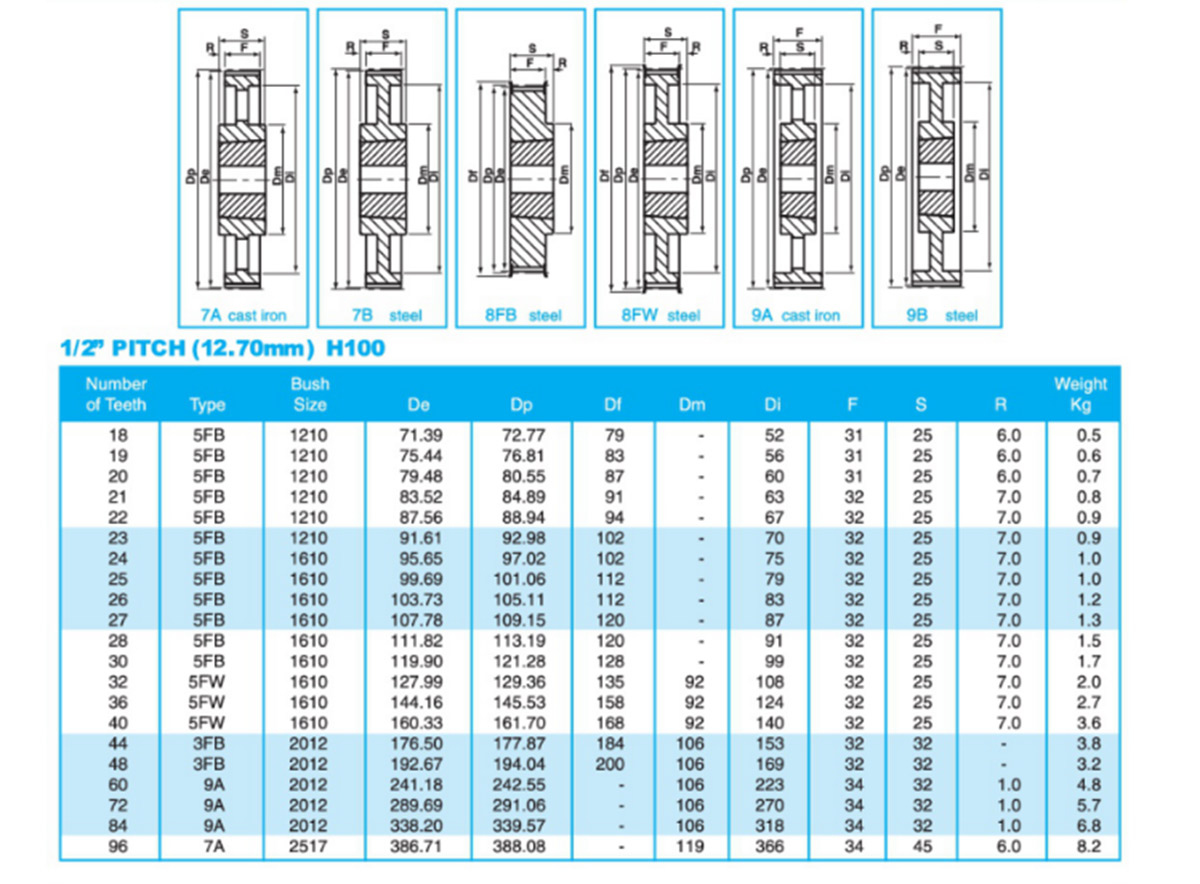
Pilot bore timing pulleys H feature a pre-machined bore for further customization to specific shaft sizes. They offer precise belt engagement and smooth synchronous transmission. Suitable for customized applications, they provide flexibility, high efficiency, and reliable performance in mechanical systems.
-
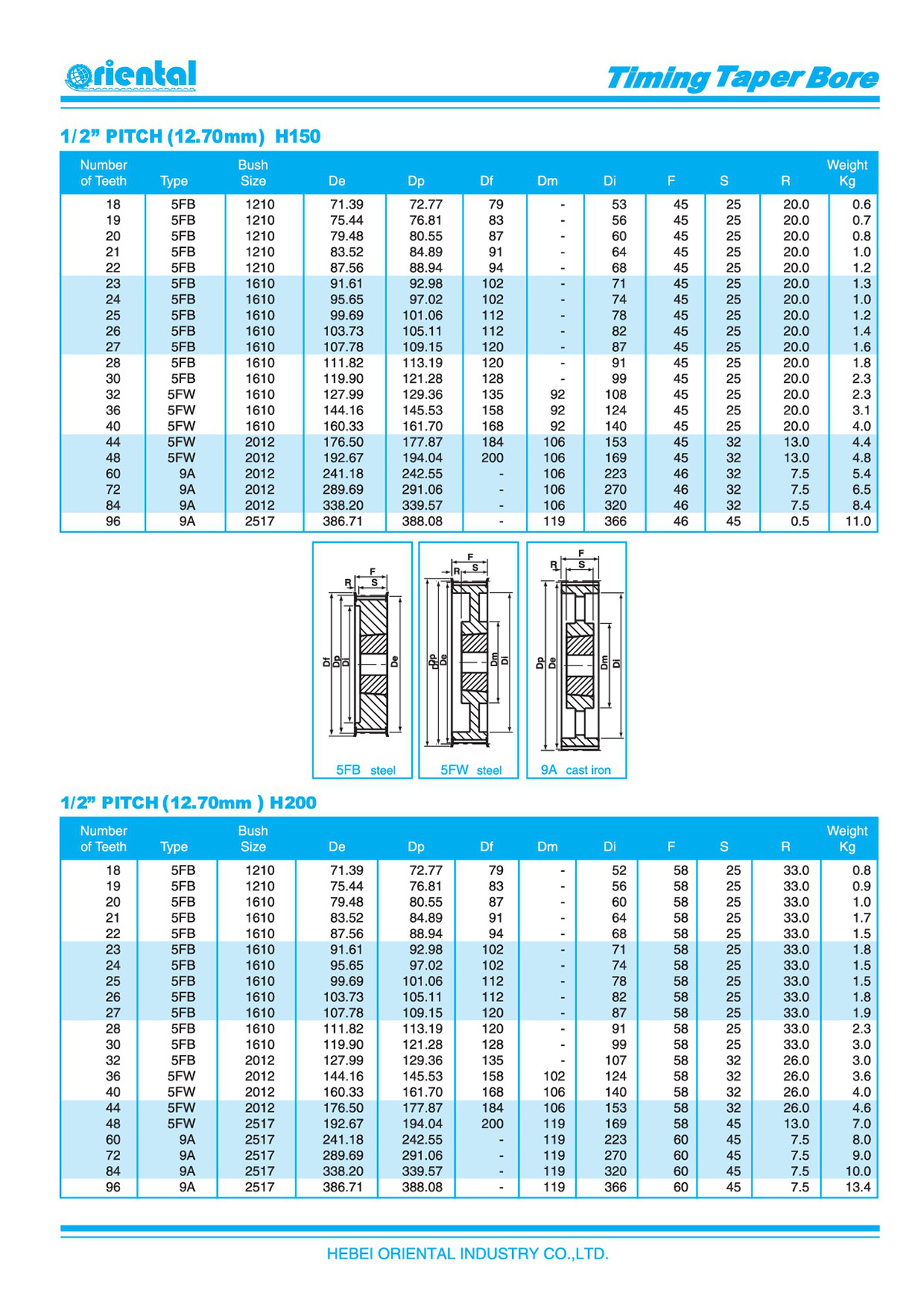
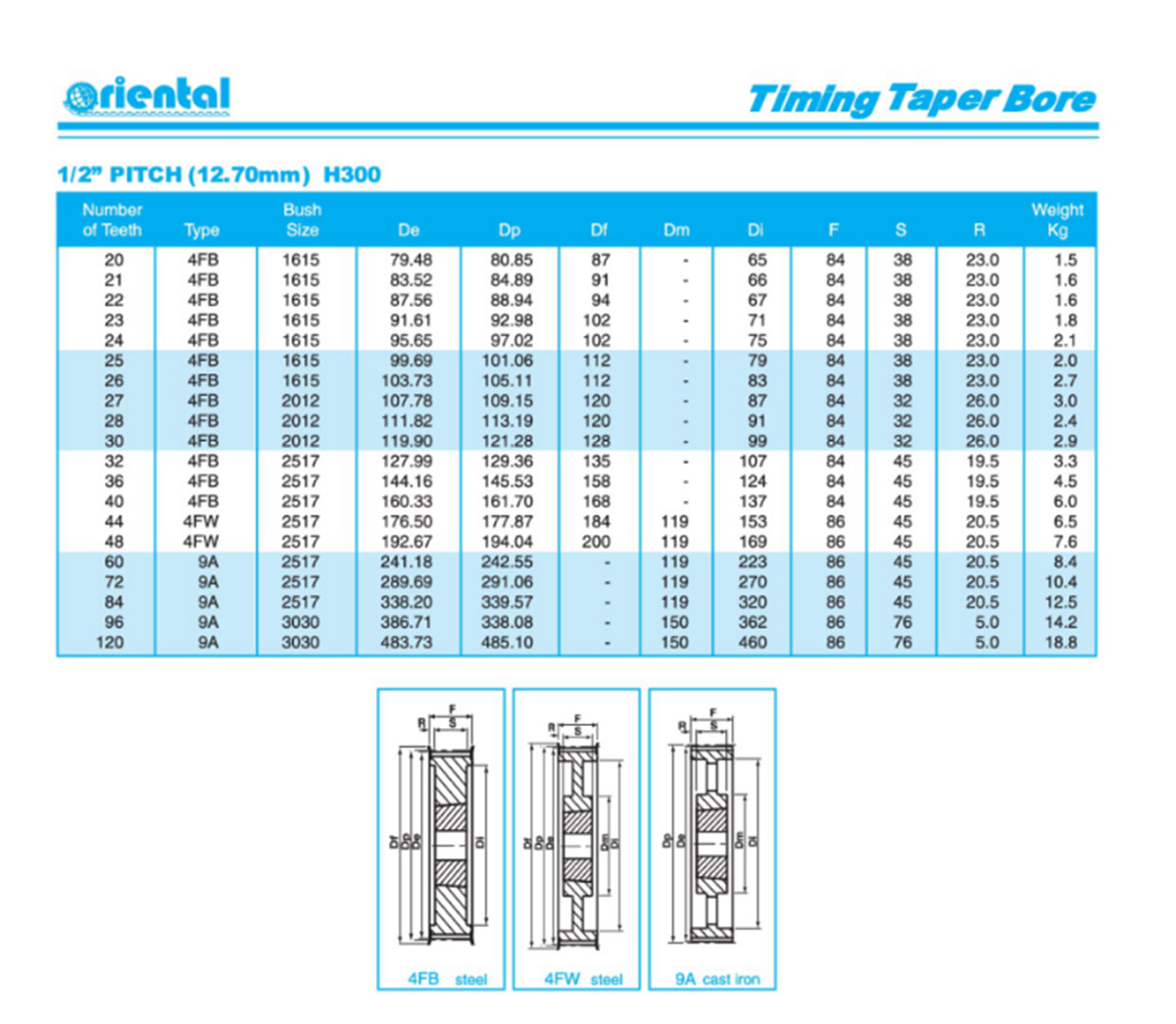
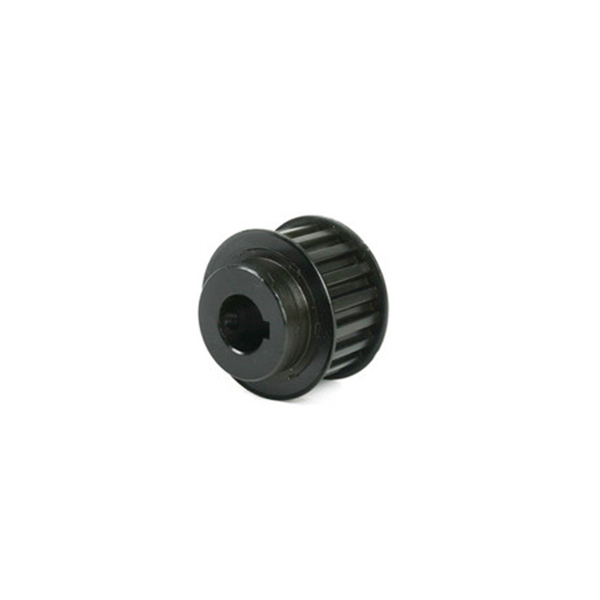 Taper bore timing pulleys H are designed for precise synchronous transmission and easy installation using taper bushes. They provide accurate motion control with no slippage and high efficiency. Ideal for industrial automation systems, they ensure reliable performance and long-lasting operation.
 -
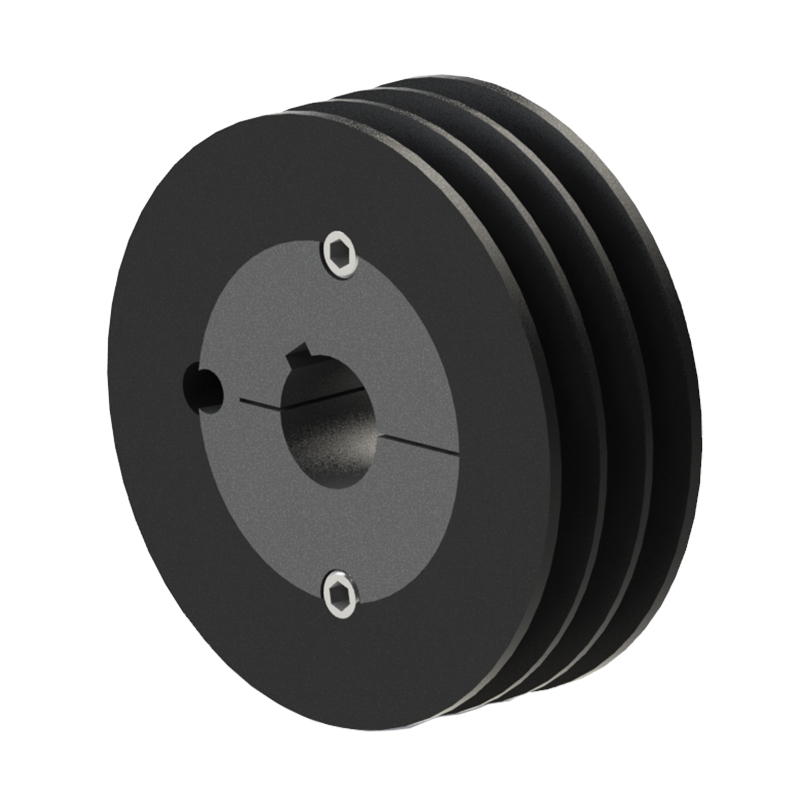 Adjustable V-belt pulleys are designed to provide variable speed control by changing the effective pulley diameter. They enable efficient power transmission and flexible operation in different working conditions. Ideal for conveyors and machinery, they help optimize performance, reduce energy consumption, and extend equipment service life.
Belt Pulleys

Waiting For You At The Hannover Show-cs
HANNOVER MESSE 2024, also known as HANNOVER MESSE, is one of the most
important exhibitions in the global industrial field, scheduled for April 22-26, 2024 in Germany
and “Intelligence” as the them...
Mar. 31, 2025
Pulley Selection
Follow simple steps for as to How to select v-belt pulley, timing pulley and flat belt pulleys for p
Jun. 23, 2020

Calculation formula of tooth number of timing-belt pulley-cs
The calculation formula of tooth number of timing-belt pulley is a very important parameter, it
will directly affect the stability of the timing-belt pulley drive and the service life of the
timing-belt . In the case that the transmiss...
Mar. 31, 2025