


Regional Analysis
Mechanical Transmission Market in Egypt
An analysis of the demand for precision power transmission components in the Egyptian industrial landscape.
Egypt's industrial sector is characterized by a strong reliance on heavy machinery in agriculture, food processing, and mining. Given the geography, machinery often operates in sandy and high-temperature environments, which places extreme stress on mechanical transmission parts. There is a critical need for components like pulleys and couplings that can withstand abrasive dust while maintaining precise alignment. The market is currently transitioning from basic, locally forged parts to high-precision engineered components that reduce energy loss and maintenance frequency.
Current market trends show an increasing shift toward modularity. Egyptian factory managers are moving away from permanent interference fits toward adjustable systems. The adoption of taper locking mechanisms is rising because they allow for faster motor swaps and pulley adjustments without destroying the shaft. Furthermore, there is a growing demand for OEM-grade casting parts that can be customized to fit older European or Asian machinery still in wide use across Egyptian industrial zones, driving the need for versatile machining capabilities.
The primary constraint in the local market remains the gap between low-cost, low-quality replacements and prohibitively expensive imported brands. This creates a significant opportunity for ISO9001-certified manufacturers who can provide "industrial-grade" reliability at a sustainable price point. The outlook for the next few years suggests that as Egypt expands its agricultural exports and mining operations, the demand for specialized l coupling and precision hubs will grow, favoring suppliers with integrated foundry and machining capacities.
Technical Journey
The Evolution of Power Transmission Components
Tracing the path from basic cast iron parts to high-precision engineered transmission systems.
Early Stage
Fixed Hub Systems
Transmission relied on pressed-fit pulleys and keyed shafts. While simple, these required high force for installation and often caused permanent shaft deformation during removal.
Adoption Phase
Taper Lock Innovation
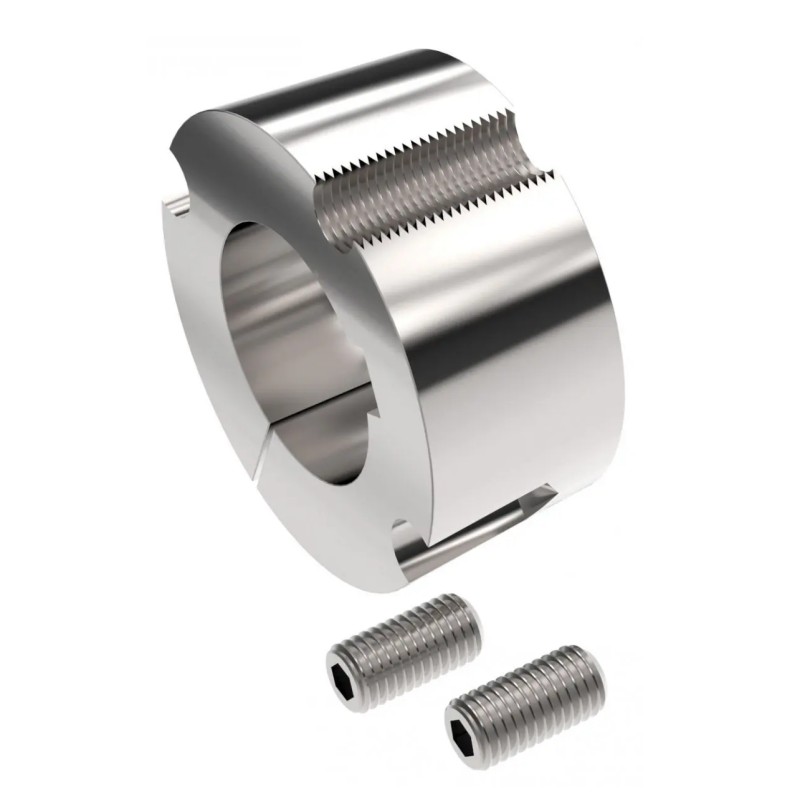
The introduction of taper bushes allowed for standardized fitting. This transition reduced installation time by 60% and enabled pulleys to be moved along the shaft for precise timing.
Current Phase
Precision Integrated Casting
Modern systems combine Lost Foam casting with CNC machining, creating components with near-zero vibration and high thermal stability for extreme industrial environments.
Shift to Modular Assemblies
Industry is moving toward interchangeable hubs and pulleys. By decoupling the bore size from the pulley diameter through taper bushes, companies can maintain a smaller inventory of parts while covering a wider range of shaft sizes.
Material Science Integration
There is a trend toward using specialized alloys that combine the damping properties of cast iron with the strength of steel, reducing noise in high-speed transmission and increasing the lifespan of bearings.
Custom-Designed OEM Parts
The rise of specialized machinery for food and pharma in Egypt is driving demand for made-to-order casting parts that meet specific hygiene and precision standards, moving away from generic off-the-shelf components.
Future Outlook
Emerging Trends in Mechanical Power Transmission
How technology is reshaping the way torque and power are transferred in industrial machinery.
Energy-Efficient Transmission
Focus is shifting toward reducing friction loss. Precision-ground taper surfaces and balanced pulleys reduce parasitic energy loss, directly lowering the electricity cost for large-scale motor operations.
Predictive Maintenance Integration
Operators are integrating sensors into motor mounts. By monitoring the vibration of the l coupling, systems can predict bush loosening before a failure occurs, allowing for scheduled maintenance.
Rapid-Change Industrial Interfaces
The demand for "Quick-Change" systems is rising. Using advanced bolt-on hubs allows factories to switch pulley ratios in minutes rather than hours, increasing production flexibility in multi-product plants.
Hybrid Material Casting
Combining metal casting with composite coatings is emerging to reduce the weight of large pulleys, reducing the inertia of the system and allowing for faster start-stop cycles in automated machinery.
The overarching trend is the movement toward "Zero-Failure" transmission. This is being achieved not through over-engineering, but through precision interfaces. In the Egyptian context, this means moving away from the "hammer-and-wedge" installation method toward calibrated torque-based fastening. When a taper bush is tightened to the correct specification, it creates a molecular-level contact between the bush and the shaft, which virtually eliminates the wear associated with keyed slots.
Furthermore, the integration of customized design services is becoming a competitive necessity. As Egyptian industries upgrade to smarter, more compact machinery, the space available for transmission components is shrinking. This requires manufacturers to produce smaller, high-torque hubs and couplings that can operate at higher RPMs without overheating, necessitating superior metallurgy and tighter machining tolerances than were required in previous decades.
Practical Applications
Industrial Deployment Scenarios in Egypt
How our transmission components solve real-world problems in various Egyptian sectors.
01
Nile Delta Grain Processing Facilities
In large grain silos, conveyors operate in dusty environments where pulleys are subject to constant abrasion. By implementing taper bush pulley systems, operators can quickly remove and clean the drive assembly without dismantling the entire conveyor line, reducing seasonal maintenance downtime from days to hours.
02
Eastern Desert Mining Operations
Mining crushers experience extreme vibration and shock loads. Standard hubs often loosen, causing shaft damage. Using our high-density Lost Foam casting and heavy-duty bolt-on hubs ensures the transmission remains locked under high-torque conditions, preventing catastrophic shaft failure in remote locations.
03
Cairo Industrial Zone Food Machinery
Food processing lines require strict hygiene and frequent belt tensioning. The use of precision taper bushes allows technicians to slide the pulley along the shaft for perfect belt tensioning without the need for expensive adjustable motor bases, ensuring smoother operation and quieter factory floors.
04
Agricultural Irrigation Pump Stations
Diesel-driven irrigation pumps often face misalignment between the engine and the pump. Installing a precision l coupling compensates for slight angular misalignments, protecting the engine bearings and extending the pump's operational life during the critical summer watering season.
05
Alexandria Port Material Handling Systems
Heavy-duty winches and cranes require reliable motor mounting that can handle sudden load spikes. Our customized machining parts provide the necessary structural rigidity and precise bore fits to ensure that power is transferred without slip, even under maximum rated capacity.
Representative Use Cases
Illustrative Deployment Perspectives
Typical operational outcomes when transitioning to precision transmission components.
Replacing fixed hubs with taper locking systems in a grain processing plant typically reduces the time required for pulley replacement by over 70%. The ability to adjust the pulley position without removing the motor simplifies the maintenance workflow significantly.
In mining environments, the shift to Lost Foam casting parts results in a noticeable decrease in component wear. High-density casting eliminates the internal porosity that usually leads to cracks under heavy shock loads in crushers.
Standardizing on ISO9001-certified pulleys and couplings removes the guesswork from procurement. Having parts that fit exactly as specified reduces the need for onsite modifications and ensures machine safety.
Our Heritage
HeBei Oriental Industry Co., Ltd.
Two decades of excellence in the manufacture and export of precision casting and machining parts.
20 Years Ago
Founding of Core Production
Established as a professional manufacturer of mechanical power transmission parts, focusing on pulleys, bushes, and couplings to serve diverse industrial needs.
Development Phase
Infrastructure Expansion
Expanded to six branches including a dedicated foundry, three machining workshops, and specialized assembly and surface treatment plants to ensure full production control.
Growth Era
Global Market Integration
Developed long-term relationships across Europe, USA, Asia, Australia, and Africa, becoming a trusted supplier for windmill generators and agriculture equipment.
Quality Milestone
ISO9001 Certification
Implemented a rigorous quality control system in accordance with ISO9001, ensuring consistent reliability in casting and machining for high-demand overseas markets.
Capacity Upgrade
Foundry Scaling
Achieved a foundry capacity of over 1000 tons per month, enabling the company to supply both internal product lines and external casting requirements for global clients.
Current
Diversified Engineering
Now offering complete OEM solutions for agricultural machines and environmental protection equipment, combining 25 years of experience in diversified casting parts.


Technical Support
Frequently Asked Questions
Clear answers to common technical and commercial queries regarding transmission components.
What is the primary advantage of a taper bush over a standard keyed hub?
The primary advantage is the elimination of the need for a press to install or remove the pulley. A taper bush uses a wedge-action locking mechanism that creates a high-friction grip on the shaft. This not only prevents shaft damage but also allows for precise axial positioning of the pulley, making belt tensioning much easier. In practical terms, it reduces maintenance time and increases the longevity of the drive shaft by avoiding the stresses of interference fits.
How does your casting process ensure durability in abrasive environments like Egyptian mines?
We utilize the Lost Foam casting process, which allows us to create parts with higher structural density and fewer internal defects compared to traditional sand casting. This results in a more uniform grain structure in the metal, which is significantly more resistant to the abrasive wear caused by dust and minerals. Additionally, our surface treatment workshop can apply specialized coatings to further harden the exterior of gears and pulleys, extending their operational life in harsh environments.
Can these components be customized for older European machinery common in Egypt?
Yes, we specialize in customer-designed products. Because we operate our own foundry and three machining workshops, we can produce made-to-order parts based on specific technical drawings or samples. We can adapt the bore sizes, pulley diameters, and hub configurations to match the exact specifications of legacy equipment, ensuring that the new parts integrate perfectly with existing shafts and belts without requiring costly modifications to the machine.
What quality standards are followed to ensure compatibility with international motors?
Our production is governed by a strict quality control system in accordance with ISO9001. This means every batch of pulleys and hubs undergoes dimensional inspection using precision gauging to ensure they meet global standards. By maintaining these tolerances, our components are compatible with most standard industrial motors used globally, ensuring a secure fit and reducing the risk of vibration or misalignment during high-speed operation.
How do I choose between a bolt-on hub and a taper bush system for my application?
The choice depends on your maintenance frequency and torque requirements. Taper bushes are ideal for applications requiring frequent adjustments, belt tensioning, or rapid replacements. Bolt-on hubs are typically preferred for permanent installations where the pulley position will never change and where maximum structural rigidity is required. We recommend evaluating the downtime cost; if frequent stops are expensive, the taper bush system is almost always the more economical choice over the long term.
What is the next step for requesting a technical quote for a custom project?
The first step is to provide us with the technical specifications, including the shaft diameter, required pulley dimensions, and the material environment. You can upload technical drawings or send a sample of the existing part. Our engineering team will then review the requirements to determine the best casting method and machining tolerance. Once the specifications are confirmed, we provide a detailed quote and a lead time based on our current foundry capacity of 1000 tons per month.
Request Technical Support
Optimize Your Power Transmission Efficiency in Egypt
Whether you are managing a mining site in the Eastern Desert or a food processing plant in Cairo, precision components are the key to reducing downtime. Our ISO9001-certified team is ready to help you select the right taper bush, pulley, or custom casting solution to ensure your machinery operates at peak performance. Contact us today to discuss your technical requirements and receive a tailored manufacturing quote.
Discuss Your Requirements