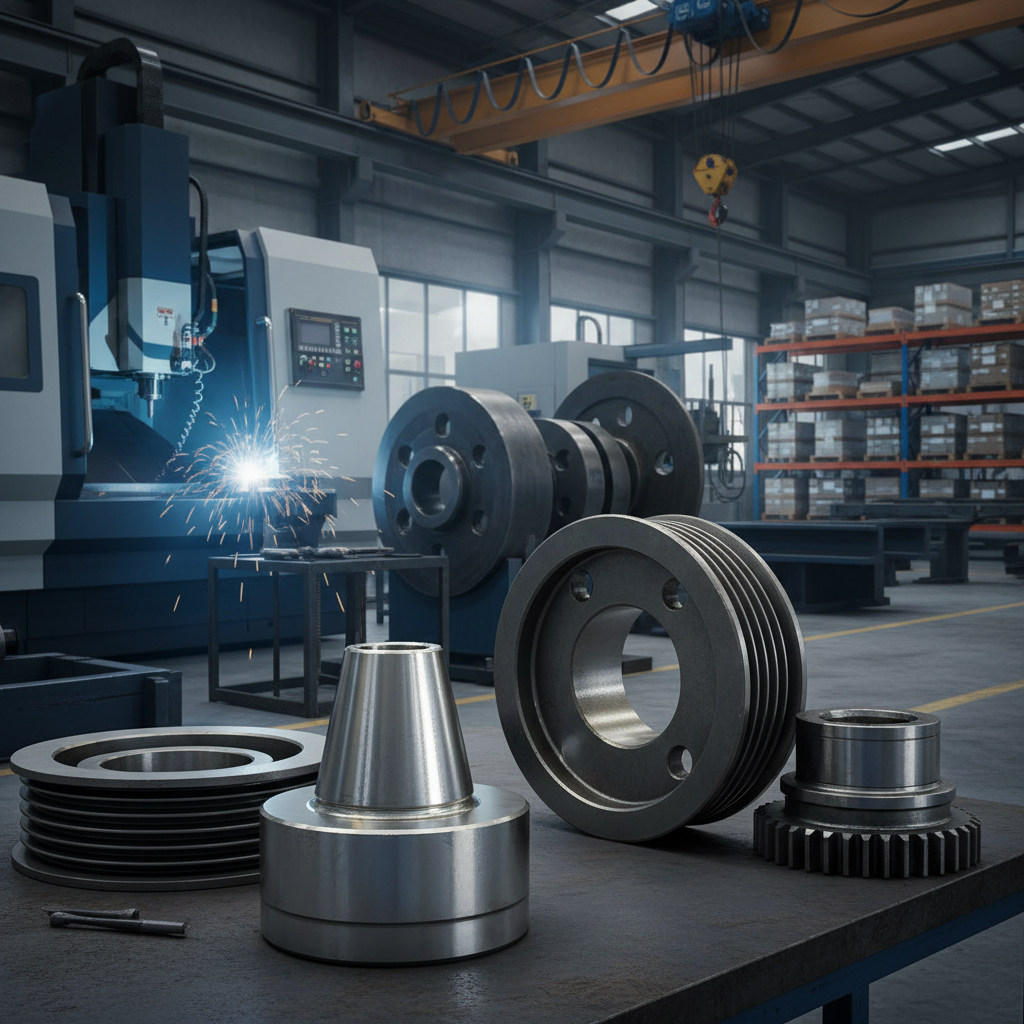
When evaluating the motor mounts price for industrial power transmission systems, buyers must look beyond the initial sticker price to understand the total cost of ownership. In the context of general equipment manufacturing, specifically within gear and gearbox production, the mounting solution is a critical interface that dictates system vibration, longevity, and overall operational efficiency.
The primary challenge for procurement managers is balancing the budget with the technical requirement for vibration dampening and alignment precision. A low-cost mount that fails prematurely can lead to catastrophic bearing wear in pulleys or couplings, resulting in downtime costs that far exceed the original savings on the hardware.
This analysis provides a comprehensive framework for understanding the cost drivers of motor mounting solutions, how to evaluate the trade-offs between materials, and a strategic approach to sourcing components that ensure long-term mechanical stability.

Analyzing Primary Cost Drivers for Motor Mounts

The motor mounts price is influenced by several intersecting variables, starting with the complexity of the geometry and the precision of the machining. In heavy-duty transmission environments, such as those involving large sprockets or V-belt pulleys, mounts must withstand significant torque loads and constant vibration, requiring thicker gauge materials and tighter tolerances.
Beyond raw material, the cost is heavily affected by the manufacturing process. For instance, components produced via specialized casting processes, such as those utilized by HeBei Oriental Industry Co., Ltd., can offer a better balance of strength and cost for high-volume orders compared to fully CNC-machined parts from solid billets.
Material Impact on Pricing and Performance
Material selection is perhaps the most direct lever affecting the price. Steel C45 is a common choice for high-strength applications, while aluminum 6061 or 6082 is preferred where weight reduction and corrosion resistance are paramount. Cast iron GG25 is frequently used for its inherent vibration-dampening properties, making it ideal for large motor bases.
Surface treatments also add to the final cost. Black phosphate, anodizing, or galvanization are not merely aesthetic; they protect the mount from industrial contaminants. For example,Timing pulleys and related mounting hardware often require specific treatments like black oxide to prevent oxidation in humid environments, which slightly increases the unit price but extends the service life.
Application-Specific Mounting Requirements
Different industrial applications dictate different mounting specifications, which in turn shift the pricing. In agriculture equipment or mining machinery, mounts must be rugged and often feature oversized bolt holes for field adjustability. Conversely, in food machinery, the focus shifts to stainless steel or high-grade aluminum to meet hygiene standards.
Integration with other transmission components, such as Motor Slider Rails or Mounting Hubs, allows for fine-tuning the tension of V-belts or timing belts. These adjustable systems have a higher initial price point than fixed plates but reduce the labor cost associated with belt replacement and tensioning throughout the machine's lifecycle.
Relative Cost Distribution by Component Grade
To understand how pricing scales, we can look at a normalized comparison of cost drivers across different grades of mounting solutions. While absolute prices vary by volume, the proportion of cost attributed to material, machining, and surface treatment remains relatively consistent.
This illustrative framework shows that as you move from Standard to Precision grades, the cost of machining and quality control (such as dynamic balancing for GG25 parts) becomes the dominant price driver, rather than the raw material cost itself.
Hidden Costs of Under-Specifying Mounts
Choosing a mount based solely on the lowest motor mounts price often leads to "hidden costs." Inadequate vibration isolation can cause premature failure of the timing belt or result in misalignment between the crankshaft and camshaft. This misalignment increases friction, raises operating temperatures, and reduces the efficiency of the power transmission.
Furthermore, poor-quality mounts are prone to fatigue cracking. When a mount fails in a production environment, the cost is not just the price of a new part, but the loss of production hours. Investing in a mount with the correct material grade (e.g., Steel C45 for high-torque) serves as an insurance policy against unplanned downtime.
Supplier Evaluation and Procurement Strategy
When sourcing motor mounts, the ability of a supplier to provide integrated solutions is a key value driver. A manufacturer that can supply both the mounting plates and the transmission components—such as Taper Lock Bushings or Timing Belt Pulleys—can ensure better compatibility and reduce the risk of interface errors.
Procurement teams should evaluate suppliers based on their vertical integration. Companies that own their foundry and machining workshops can offer more competitive pricing on customized designs and better quality control over the raw casting, ensuring that the final product meets ISO9001 standards for reliability and precision.
Comparison of Mounting Solution Categories
Depending on the mechanical requirements of the system, different mounting categories offer different value propositions. The following table compares common approaches based on their technical characteristics and cost implications.
| Mount Type | Material Focus | Primary Advantage | Relative Cost |
|---|---|---|---|
| Fixed Plates | Cast Iron/Steel | High Stability | Low |
| Slider Rails | Hardened Steel | Easy Adjustment | Medium |
| Dampening Mounts | Composite/Rubber | Vibration Control | Medium |
| Precision Hubs | Aluminum/Steel | Perfect Alignment | High |
| Custom Castings | GG25/Steel | Application-Fit | Variable |
| Adjustable Plates | Galvanized Steel | Versatile Setup | Medium |
The decision should be based on the specific torque and vibration profile of the motor. For standard V-belt pulley systems, adjustable plates often provide the best ROI by simplifying installation and maintenance.
Frequently Asked Questions
The price is primarily driven by material selection (e.g., Aluminum 6082 vs. Steel C45), the precision of the machining tolerances, the complexity of the design, and the type of surface treatment applied for corrosion protection.
Cast iron GG25 is generally superior for vibration dampening and is more cost-effective for large, complex shapes. Steel is preferred for applications requiring higher tensile strength and impact resistance.
While slider rails increase the initial purchase price compared to fixed plates, they significantly lower long-term costs by reducing the time and labor required for belt tensioning and motor alignment.
Common treatments include black phosphate for general industrial use, anodizing for aluminum parts, and galvanization for components exposed to harsh or outdoor environments.
Yes, custom mounts can be engineered to optimize load distribution and vibration isolation for a specific machine, which reduces wear on pulleys and bearings, thereby extending maintenance intervals.
Look for suppliers with vertical integration (foundry and machining), ISO9001 certification, and a proven track record in providing matching transmission parts like couplings and pulleys.
Conclusion
Determining the optimal motor mounts price requires a shift from analyzing unit cost to analyzing system reliability. By aligning material selection and mounting technology—such as moving from fixed plates to slider rails where necessary—manufacturers can significantly reduce operational risks and maintenance expenses.
For organizations seeking high-precision mounting solutions and integrated transmission components, detailed product specifications and customized engineering options are available at www.hbopt.com to ensure maximum mechanical efficiency.