THE BUYER'S GUIDE / SELECTION
Buy Stock Bore Sprockets: Application Fit and Specification Checks
When you decide to buy stock bore sprockets, the purchase decision comes down to three practical variables: bore configuration (stock bore vs. taper bore), chain pitch compatibility, and the mechanical demands of your application. This guide explains how those variables map to the available product lines from HEBEI ORIENTAL INDUSTRY CO., LTD., so procurement teams and engineers can verify specification fit before placing an order.

Bore configuration match: determine whether the application requires a pre-machined fixed bore (standard stock bore) or a taper-bush interface (taper bore) before selecting a product group. Fixed shaft diameters suit stock bore; variable or field-adjustable shaft diameters suit taper bore stock sprockets.
Chain pitch and strand count compatibility: confirm the roller chain pitch code (05B–32B for standard stock bore; 06B–24B for taper bore) and the required strand count (simplex, duplex, or triplex) against the published pitch series and hub-dimension variants. A pitch mismatch or wrong strand configuration will cause premature wear and must be verified before ordering.
Application and environment requirements: evaluate whether the drive operates in a corrosive, food-grade, or long-pitch conveyor environment. Standard pre-machined stock bore sprockets are suited to general industrial drives; stainless steel, tensioner, hinge, and double simplex variants in the extended customisation range address specialised conditions.
Why Bore Configuration Is the First Decision
Before you buy stock bore sprockets, clarify whether your drive requires a fixed, pre-machined bore or a taper-bush interface. The two configurations solve different installation problems, and choosing the wrong one means re-machining or re-ordering.
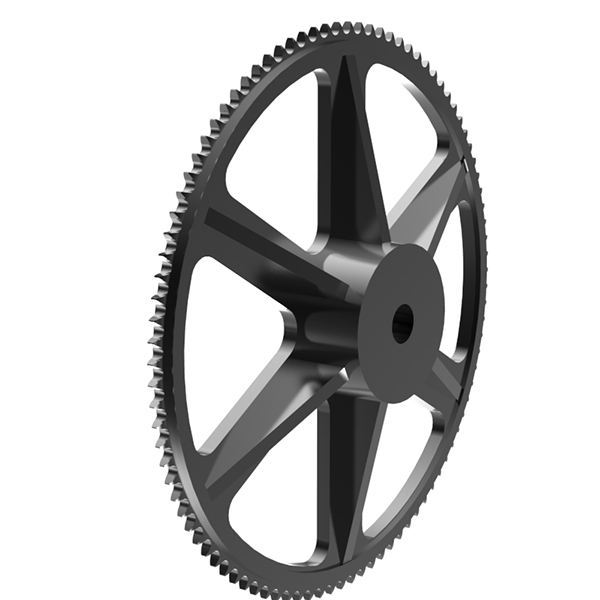
Stock bore sprockets are pre-machined to a finished bore diameter so they mount directly onto a standard shaft without additional tooling. This makes them the preferred choice when shaft diameters are fixed and interchangeable spares need to be stocked in quantity. HEBEI ORIENTAL INDUSTRY CO., LTD. offers stock bore sprockets covering roller-chain pitches from 05B (pitch 8 mm) through 32B (pitch 50.80 mm), accommodating simplex, duplex, and triplex chain configurations as well as hub-welded variants.
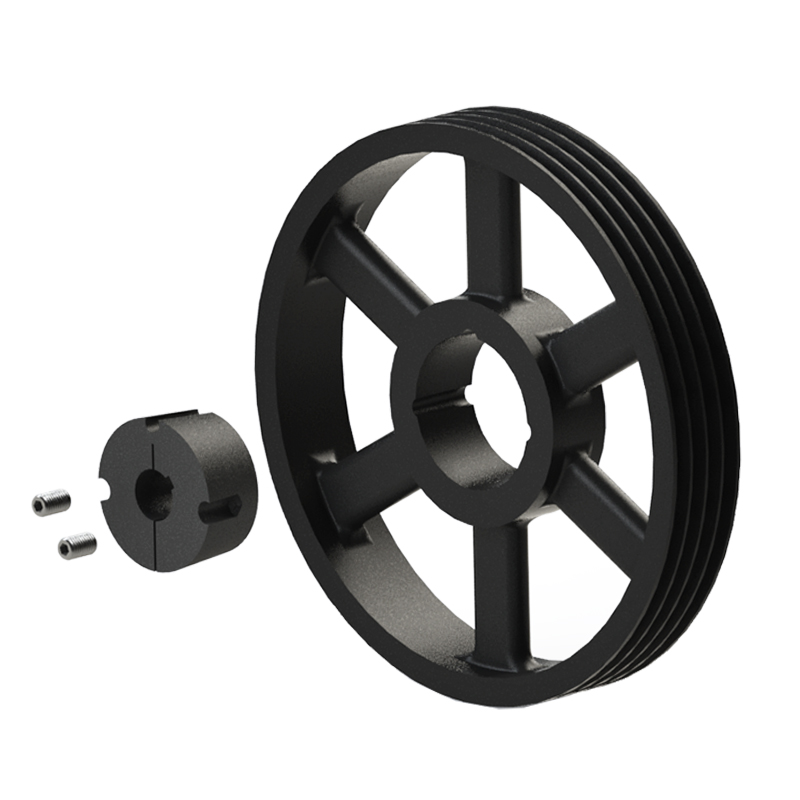
Taper bore stock sprockets accept a taper bush, which lets the installer fit the same sprocket body onto shafts of different diameters by swapping the bush. This combination delivers a strong shaft connection and simplifies maintenance on drives where the shaft size may vary across installations or where quick removal is a priority. The taper bore range covers 06B through 24B pitches.
Specification Check: Chain Pitch
Chain pitch is the centre-to-centre distance between roller pins. A sprocket must match the chain pitch exactly; even a single-step mismatch causes accelerated wear and vibration. Use the pitch codes below as your checklist:
| Series | Pitch |
|---|---|
| 05B | 8.00 mm |
| 06B | 9.525 mm |
| 081 | 12.70 mm |
| 083/084 | 12.70 mm |
| 08B | 12.70 mm |
| 10B | 15.875 mm |
| 12B | 19.05 mm |
| 16B | 25.4 mm |
| 20B | 31.75 mm |
| 24B | 38.1 mm |
| 28B | 44.45 mm |
| 32B | 50.80 mm |
For taper bore stock sprockets specifically, the confirmed pitch range is 06B–24B. If your chain falls outside that range, the standard stock bore (pre-machined) product line extends down to 05B and up to 32B.
Specification Check: Drive Strand Count
Standard stock bore sprockets are available with hubs dimensioned for simplex, duplex, and triplex chains. Confirm the strand count of your roller chain before ordering:
- Simplex – single-strand chain; suitable for straightforward power transmission at moderate loads.
- Duplex – two-strand chain; increases power capacity without changing the pitch.
- Triplex – three-strand chain; used in high-load or compact drive layouts where a larger sprocket pitch is impractical.
Hub dimension variants are confirmed for welded-hub stock bore sprockets in all three strand counts.
Specification Check: Application and Environment
Material and surface treatment affect service life in specific environments. The product descriptions confirm high-quality materials and a focus on durability, but do not specify individual material grades or coatings in the published product data. For applications involving:
- Corrosive or food-grade environments – the extended range under Stock Bore Sprockets With Other includes stainless steel sprockets.
- Conveyor systems with long pitch – conveyor sprockets with long pitch are listed in the same extended range.
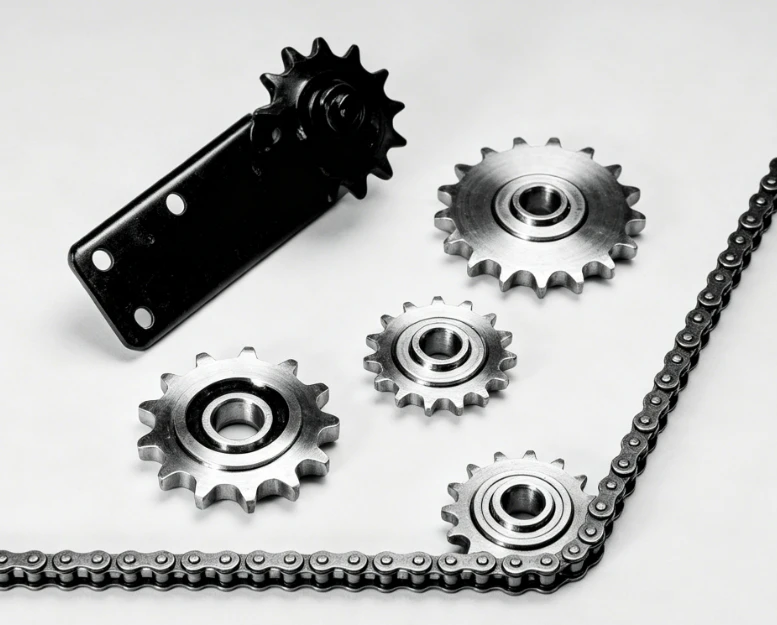
- Tensioning requirements – sprocket tensioners are available as part of the customised stock bore range.
- Hinge-belt or double-simplex layouts – wheels for hinge sprockets and double simplex sprockets are confirmed options.
If your application falls into one of these categories, the standard pre-machined simplex stock bore may not be the correct product, and additional configuration details should be confirmed with the supplier before ordering.
Selecting Between the Three Product Groups
| Your requirement | Recommended product group |
|---|---|
| Fixed shaft diameter, rapid spare stocking, pitches 05B–32B | Stock bore sprockets (standard pre-machined) |
| Variable shaft diameter, fast bush-swap maintenance, pitches 06B–24B | Taper bore stock sprockets |
| Corrosive environment, long-pitch conveyor, tensioner, hinge belt, double simplex | Stock bore sprockets with additional customisation options |
This table is a starting point. A final selection should verify the specific bore diameter, number of teeth, pitch diameter, and hub projection against your shaft and casing drawings.
Key Questions to Resolve Before You Place an Order
- What is your roller chain pitch? Match the pitch code (e.g., 16B = 25.4 mm) to the available series.
- Is your shaft diameter fixed or variable? Fixed → stock bore; variable or field-adjustable → taper bore with taper bush.
- How many chain strands does your drive use? Confirm simplex, duplex, or triplex hub dimensioning.
- Does your environment require stainless steel or special configurations? If yes, check the extended customisation range.
- What is the required number of teeth? Tooth count determines chain speed ratio; confirm against your drive design.
Answering these five questions before you buy stock bore sprockets eliminates the most common cause of mis-orders and avoids re-machining costs.
About HEBEI ORIENTAL INDUSTRY CO., LTD.
HEBEI ORIENTAL INDUSTRY CO., LTD. is a manufacturer and exporter of casting parts and machining parts, with production capabilities covering one foundry, three machining workshops, one assembling workshop, and one surface treatment workshop. Mechanical power transmission parts — including sprockets, pulleys, bushes, hubs, and couplings — are among the company's main product lines, supported by a quality control system operated in accordance with ISO 9001. The foundry capacity exceeds 1,000 tons per month, supporting both standard catalogue items and customer-designed products for agricultural equipment, food machinery, mining equipment, and wind-power applications.
THE PEOPLE

About the author
THE COMPANY
HEBEI ORIENTAL INDUSTRY CO., LTD.
HeBei Oriental Industry Co., Ltd. is a professional manufacturer and exporter of casting parts and machining parts. Our company has six branches with 300 employees, which includes one foundry, three machining workshops, one assembling workshop and one surface treatment workshop. Mechanical power transmission parts, eg. pulleys, bushes, hubs, couplings etc, are our main traditional products, which we have been produced around 20 years.…
About Us ↗Visit company website ↗YOUR NEXT STEP
Bring your brief. Start a useful conversation.
Use case, specification, quantity and delivery window: make the next conversation specific.
Post time: Oct . 28, 2026 00:24