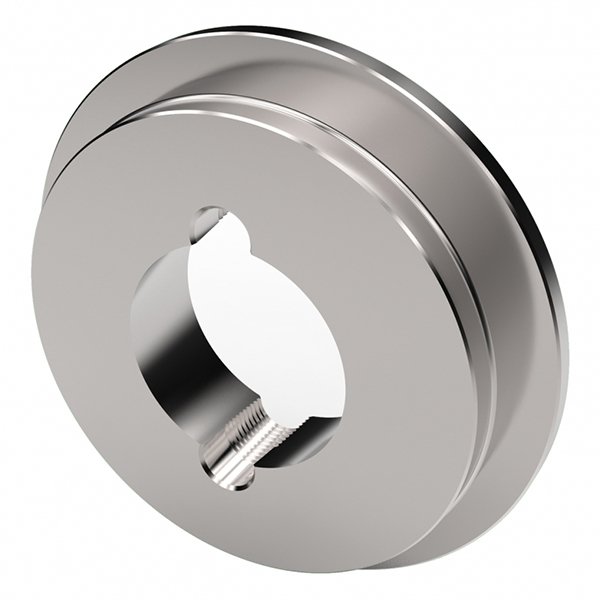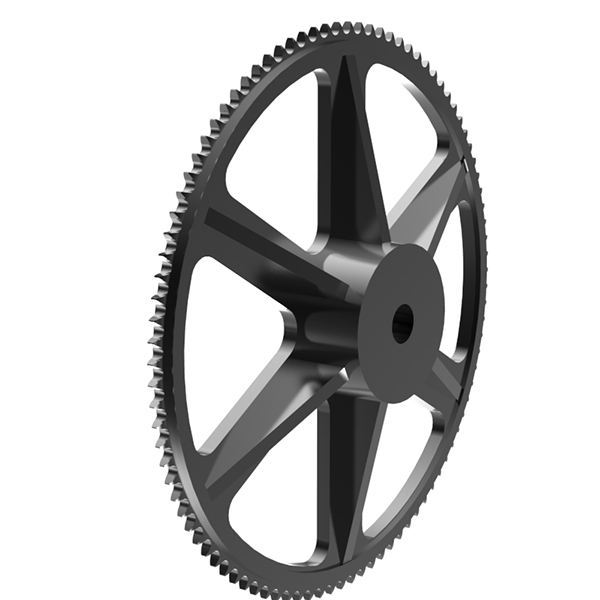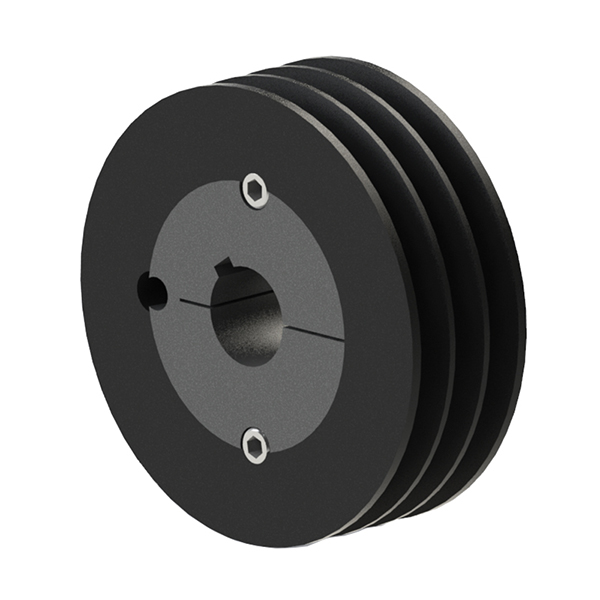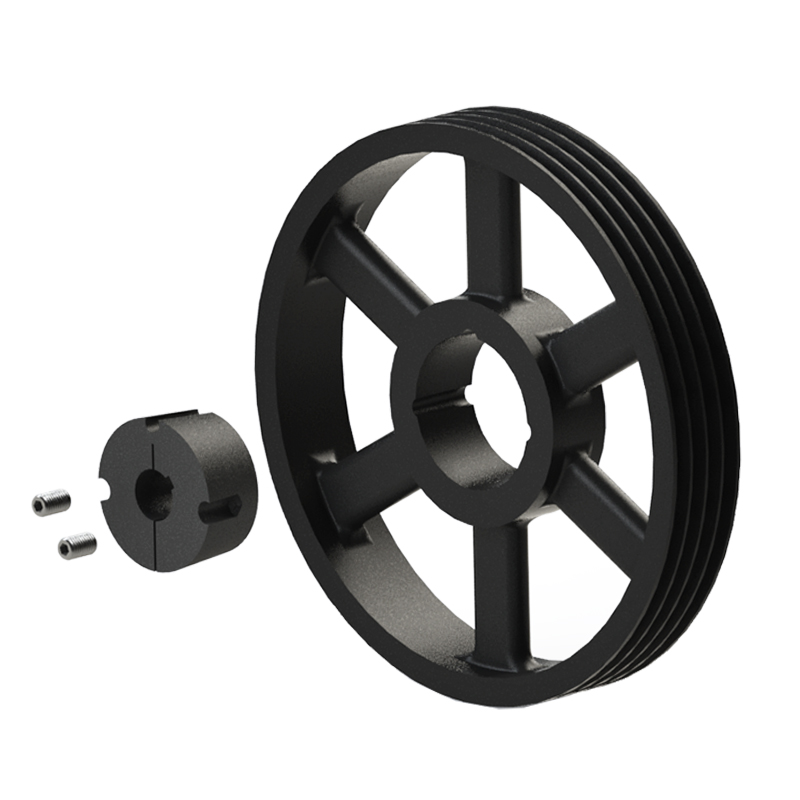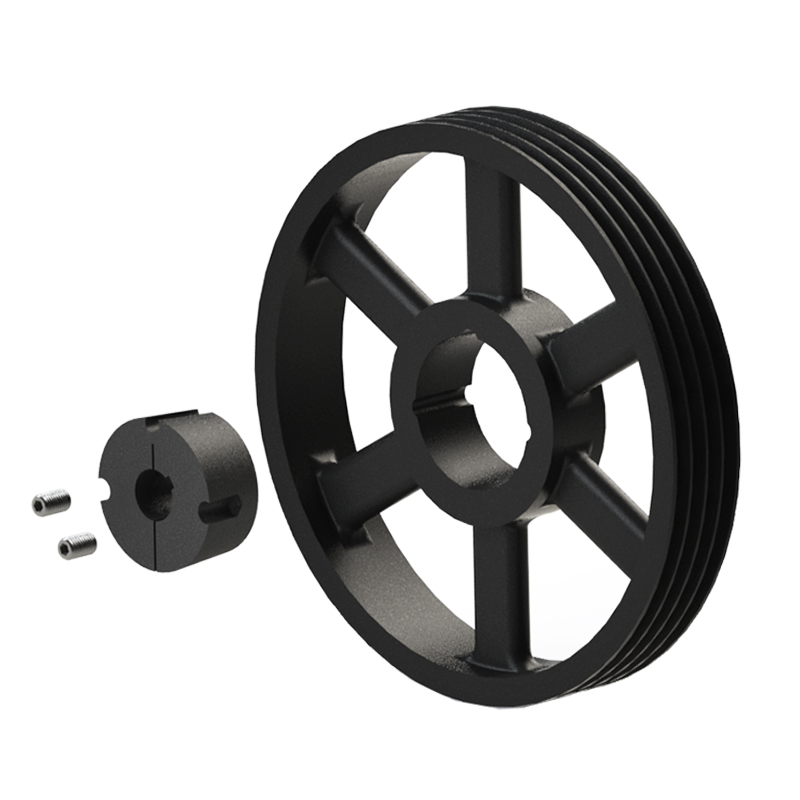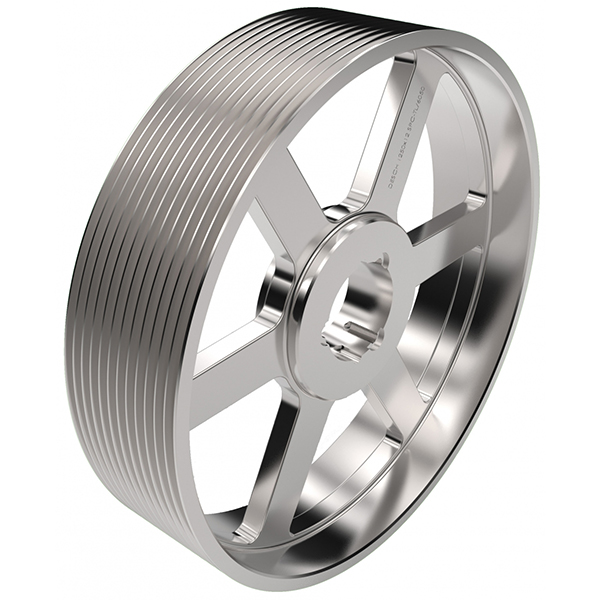

A practical guide to selecting Universal Timing-Belt Pulleys for synchronous power transmission. Compare belt profile, tooth count, bore, width, material, and surface treatment before requesting a price.
Belt and tooth geometry: match the pulley profile to the belt, then confirm the required tooth count.
Dimensional and construction fit: check inner bore, bore precision, belt width, material, and surface treatment against the machine design.
Start with the belt profile
A timing belt pulley must match the belt that will run on it. Universal Timing-Belt Pulleys are available with trapezoidal profiles such as XL, L, H, XH, and XXH, plus T2.5, T5, T10, and T20. Arc-tooth options include HTD3M, HTD5M, HTD8M, HTD14M, HTD20M, GT2, GT3, and GT5.
This is the first specification to settle when comparing timing belt pulley price. A lower-cost pulley with the wrong tooth profile will not fit the intended belt. For an existing machine, take the belt profile from the current part or drawing before asking for a quotation.
Check the dimensions that determine fit
The product range covers 10 to 150 teeth, with customized tooth counts available. Inner bores range from 2 to 200 mm with H7 precision, and customized bores are also available. Belt widths include 4, 6, 9, 10, 12, 15, 20, 25, 30, 40, and 50 mm, as well as inch widths from 1/4 inch to 2 inches.
These details suit buyers replacing a pulley in an established drive, as well as engineering teams specifying a new synchronous transmission. Send the tooth count, bore, belt width, and profile together. The supplier can then price the actual configuration instead of a generic pulley description.
Choose the material for the machine context
Material options include cast iron GG25, steel C45, Aluminum 6061, and Aluminum 6082. Aluminum and steel are identified for timing pulleys used in engine and industrial equipment applications, while the broader product range supports automation, robotics, and precision machinery.
Buyers working on a lightweight assembly may want to compare the aluminum options with steel or cast iron. A pulley for a demanding industrial drive may call for a different material choice than one used in a compact automation mechanism. The correct choice depends on the machine design, belt drive requirements, and the material specified in the drawing.
Select the surface treatment
Available surface treatments include anodizing, black oxide, phosphate, and galvanization. The product description also identifies black phosphate for timing belt pulleys except aluminum material. If the part replaces an existing pulley, match the required treatment to the assembly and purchasing specification.
Who should choose this pulley range?
Universal Timing-Belt Pulleys suit automation, robotics, and precision machinery projects that need synchronous power transmission, precise positioning, and no slippage. They also fit buyers who need a defined tooth count, bore, or belt width for a replacement or custom configuration.
Picture a robotics drive where the pulley must maintain synchronization while the belt follows a specified profile. Confirm the profile, tooth count, bore, and belt width against the drive drawing before ordering. For a precision machine, the H7 bore option can be included in the dimensional review.
The range is less suitable when the machine uses a V-belt. V-belt pulleys use V-shaped grooves and belong to a different belt-and-groove system. Match the pulley to the belt type already specified for the equipment.
What to send for a timing belt pulley price
Include these details in the quotation request:
- Belt profile
- Tooth count
- Inner bore and required precision
- Belt width
- Material
- Surface treatment
- Quantity and drawing, if a custom configuration is required
This range gives buyers several configuration points to compare before purchase. Send the belt profile, tooth count, bore, width, material, treatment, and quantity to HEBEI ORIENTAL INDUSTRY CO., LTD. for a configuration-specific quotation.
The people

About the author
The company
HEBEI ORIENTAL INDUSTRY CO., LTD.
HeBei Oriental Industry Co., Ltd. is a professional manufacturer and exporter of casting parts and machining parts. Our company has six branches with 300 employees, which includes one foundry, three machining workshops, one assembling workshop and one surface treatment workshop. Mechanical power transmission parts, eg. pulleys, bushes, hubs, couplings etc, are our main traditional products, which we have been produced around 20 years.…
About Us ↗Visit company website ↗Your next step
Bring your brief. Start a useful conversation.
Use case, specification, quantity and delivery window: make the next conversation specific.
Post time: Nov . 03, 2026 01:46