
A tyre coupling suits industrial drives that need shock absorption, vibration damping, and tolerance for shaft misalignment. Our range covers sizes 040 to 250 with B, F, and H series options, plus pilot bore and taper bore flange designs. Use the equipment size, shaft mounting method, and working conditions to narrow the configuration before requesting a quotation.
Application duty: check whether the drive requires a flexible rubber element to absorb shock and vibration while accommodating parallel, angular, or axial shaft misalignment.
Size and mounting configuration: match the 040 to 250 size range and B, F, or H series with the shaft dimensions, available clearance, and pilot bore or taper bore flange arrangement.
Order information: confirm shaft diameters, shaft-end distance, operating speed, transmitted power or torque, existing coupling markings, and installation access before requesting a quotation.
Start with the duty of the drive
Choose a tyre coupling when the drive needs a flexible connection between shafts. The rubber element absorbs shock and vibration while accommodating shaft misalignment, so the coupling suits heavy-duty power transmission where a rigid connection would pass more disturbance into the connected equipment. We supply the range for industrial transmissions that require smooth and quiet operation.
The first check is the working duty of the machine. Drives exposed to shock loads, vibration, or changing alignment conditions are the clearest fit for a flexible rubber element. Picture a motor and gearbox connected in a production line: the coupling must transmit rotation while the rubber element takes up movement between the shafts. For a conveyor, crusher, gearbox, or similar transmission, send us the drive arrangement and operating conditions so we can match the coupling size and series to the application.
Misalignment should be treated as a selection condition, not an afterthought. A tyre coupling can accommodate parallel, angular, and axial misalignment, but the actual installation still needs suitable shaft alignment and adequate space around the coupling. Measure the shaft centerline, the distance between shaft ends, and the available radial and axial clearance before choosing the assembly.
Match the size range to the machine
Our tyre coupling range covers sizes 040 to 060 and sizes 070 to 250. That gives you a size family for smaller machinery as well as larger industrial power transmission equipment. The coupling size should be selected from the machine's transmitted requirements and shaft arrangement, not from the keyword used to describe the replacement part.
When preparing an inquiry, provide the existing coupling size if it is known, along with shaft diameters, shaft ends, operating speed, transmitted power or torque, and the space available for installation. These details let us check the fit instead of treating the coupling as a generic replacement. A drawing or a clear dimensional sketch is useful when the drive has limited clearance.
Do not order from the size label alone when replacing an installed coupling. Two assemblies with a similar nominal size can still require different bore arrangements or flange configurations. Check the connection at both shafts and identify whether the machine needs a pilot bore or a taper bore flange.
Select the flange arrangement before ordering
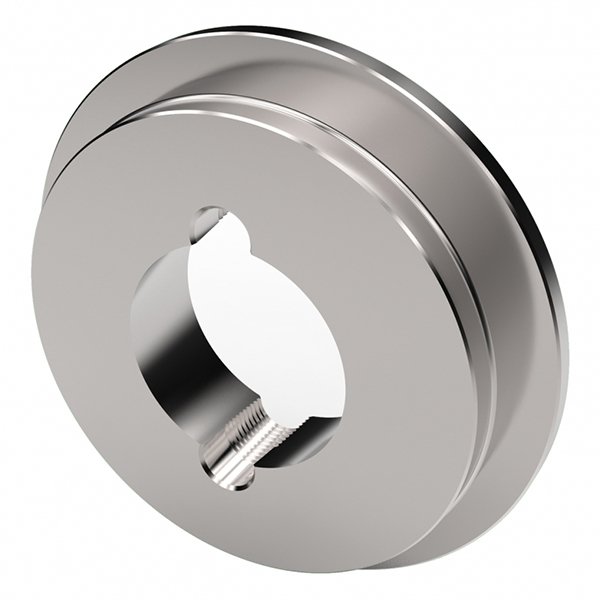
The mounting interface is one of the clearest specification checks. We supply pilot bore and taper bore flange options.
A pilot bore flange starts with a pre-drilled bore that can be machined for the required shaft fit. This arrangement suits projects where the bore must be prepared for a specific shaft diameter or where the final machining is part of the installation plan. Send the shaft dimensions and keyway information with the inquiry so we can discuss the required bore preparation.
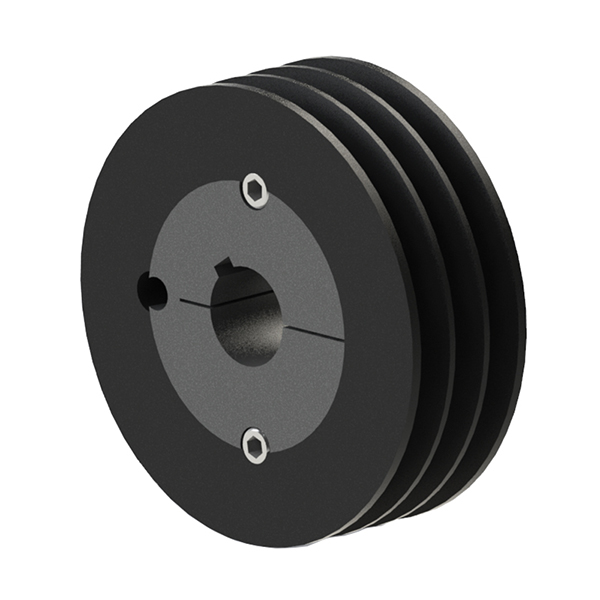
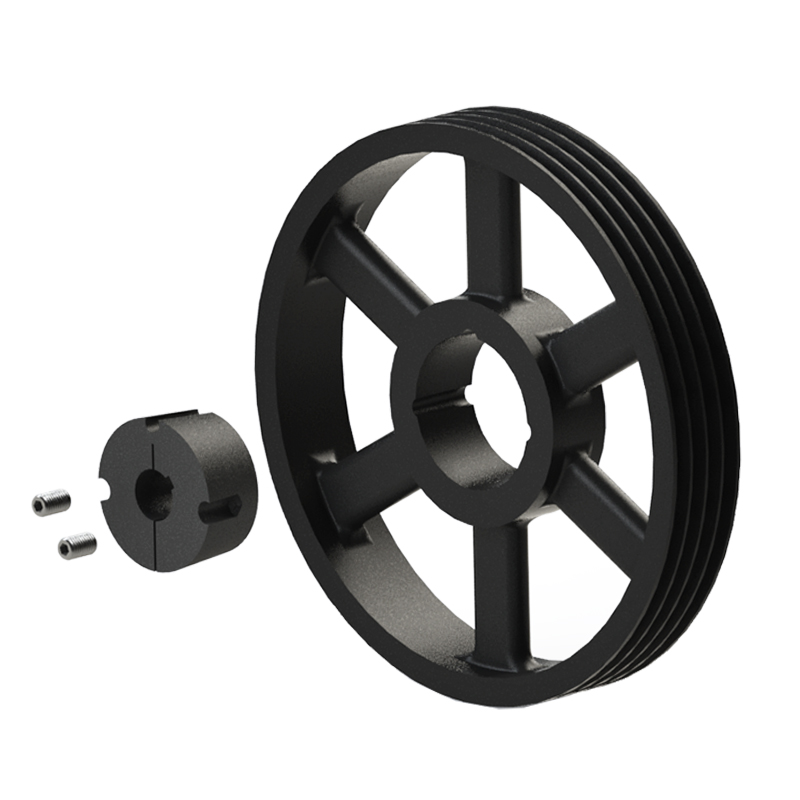
A taper bore flange uses a tapered bushing for shaft mounting and removal. This can suit equipment where the coupling may need to be replaced or removed during maintenance. Confirm the shaft and bushing arrangement before ordering, then check that the surrounding guards and access route leave enough room for installation and removal.
The bore choice affects the way the coupling connects to the machine. It should be settled together with the shaft diameters, keyway details, shaft extension, and available working space. If you are replacing a coupling, include photographs of the installed hubs and the surrounding guard, plus a dimensional drawing when possible.
Use the series designation as a configuration check
The range includes B, F, and H tyre coupling series. Treat the series designation as part of the equipment matching process. It belongs alongside the coupling size, flange arrangement, shaft dimensions, and available space in the purchase inquiry.
For an existing installation, record the series marking on the coupling or send a clear photograph of the hub and flange. For a new drive, send the motor, gearbox, shaft, and mounting information so we can identify the suitable series and size. This avoids choosing a series from a short product description without checking the complete drive arrangement.
The same selection method applies to the related F-series descriptions often used in purchasing searches. The phrase “F tyre coupling” identifies a series, but it does not replace the shaft and duty information needed to configure the coupling. Use the series as a starting reference, then confirm the rest of the connection details.
Check the working scene, not only the catalog size
A tyre coupling is useful where the connected shafts experience shock, vibration, or misalignment during normal transmission. Imagine a heavy industrial drive starting under load. The flexible rubber element is intended to absorb shock and reduce vibration as torque passes between the shafts. In a second situation, imagine an installed drive where small parallel, angular, or axial movements occur between the shaft centerlines. The coupling's flexibility helps accommodate those movements while the machine operates.
These scenarios do not remove the need for a proper mechanical fit. Measure the guard opening against the coupling's outside space, check the shaft-end distance, and confirm that maintenance personnel can reach the flange and bushing area. For a pilot bore design, also plan how the bore will be machined. For a taper bore design, plan the access needed to install and remove the tapered bushing.
Our tyre coupling range is intended for heavy-duty power transmission applications requiring shock absorption, vibration damping, and misalignment compensation. We can review a customer-designed arrangement when the inquiry includes the dimensional and operating details needed for the selection.
Questions to settle before the inquiry
Which bore option suits a replacement coupling?
Choose the bore option from the way the shaft is mounted and maintained. A pilot bore flange is prepared for further machining to a specific shaft fit. A taper bore flange uses a tapered bushing for installation and removal. Send the existing hub dimensions, shaft diameters, and a photograph of the connection so we can identify the appropriate arrangement.
What information should accompany a size request?
Provide the coupling size if known, shaft diameters, shaft-end distance, operating speed, transmitted power or torque, and the available radial and axial space. Add the series marking and flange type when replacing an installed unit. A drawing is especially useful when the coupling sits inside a close-fitting guard or has restricted maintenance access.
Can one tyre coupling accommodate more than one type of misalignment?
Yes. The flexible rubber element can accommodate parallel, angular, and axial misalignment. The drive still needs a suitable mechanical installation, with the shaft positions and available clearances checked before operation. Include the shaft arrangement and working conditions in the inquiry so we can assess the coupling size and series for the complete connection.
Send the drive details with the request
Select our tyre coupling range when your transmission needs a flexible rubber element for shock, vibration, and shaft misalignment. Use the 040 to 250 size range, B, F, or H series, and pilot or taper bore choice as configuration points. For a quotation, send the shaft diameters, speed, power or torque, shaft-end distance, clearance, existing markings, and any drawing or photographs.

About the author
The company
HEBEI ORIENTAL INDUSTRY CO., LTD.
HeBei Oriental Industry Co., Ltd. is a professional manufacturer and exporter of casting parts and machining parts. Our company has six branches with 300 employees, which includes one foundry, three machining workshops, one assembling workshop and one surface treatment workshop. Mechanical power transmission parts, eg. pulleys, bushes, hubs, couplings etc, are our main traditional products, which we have been produced around 20 years.…
About Us ↗Visit company website ↗Post time: Nov . 10, 2026 01:20