
Universal Timing-Belt Pulleys Cost Comparison: Aluminum vs Steel
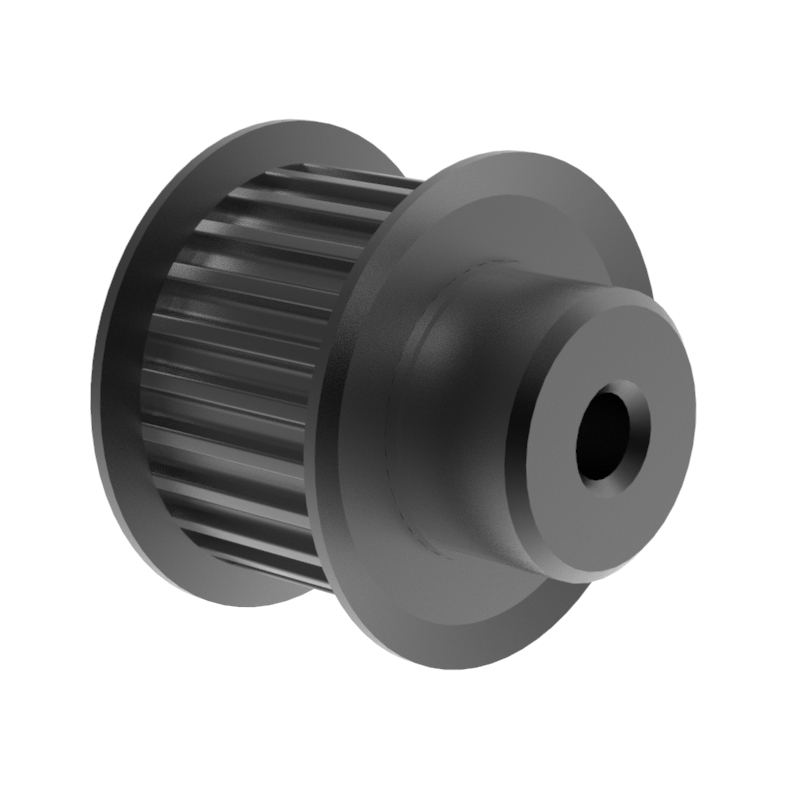
Procurement decisions for industrial equipment often default to raw material spot prices when sourcing Universal Timing-Belt Pulleys, yet upfront metal costs represent only a fraction of total lifecycle expenditures. Mechanical design engineers must instead evaluate the interplay between initial component acquisition, machining labor, and operational replacement downtime across diverse mechanical assemblies.
Material selection dictates both direct manufacturing overhead and logistics expenditures throughout the supply chain. Aluminum 6082/6061, steel C45, and cast iron GG25 each impose distinct cost structures when specified across standard component configurations.
Profile geometry further influences production economics across extensive metric and imperial ranges. Specifications spanning XL, L, H, XH, XXH, T2.5, T5, T10, AT5, AT10, GT2, GT3, GT5, 3M, 5M, 8M, T20, HTD3M, HTD5M, HTD8M, HTD14M, HTD20M, Gt2, Gt3, and Gt5 dictate specific tooling overhead and setup durations.
Dimensional requirements between 4mm and 50mm introduce secondary machining variables that alter final unit economics. Total cost of ownership frameworks must account for these machining factors alongside teeth ranges spanning from 10 to 150 teeth and bore diameters from 2 to 200mm to accurately project long-term financial impact.
Aluminum 6082/6061 Cost Analysis: Balancing Lightweight Freight Against Raw Material Spot Prices
Aluminum 6082 and Aluminum 6061 components incur elevated raw material spot pricing compared to alternative baseline metals, yet their low density substantially lowers total logistics expenditures. Procurement calculations for components spanning 10 to 150 teeth frequently isolate metal acquisition costs while overlooking the corresponding freight savings generated during international transit. Lower component mass reduces chargeable weight thresholds across standard freight carriers, directly offsetting initial metal price premiums.
Material density differences between light alloys and heavier alternatives dictate distinct shipping economics. High-volume shipments of ferrous alternatives accumulate heavy dimensional weight surcharges, whereas aluminum equivalents mitigate these recurring transport penalties.
Freight Cost Differential Across Material Classes
Logistics expenditures scale directly with shipment mass across industrial supply chains. Substituting heavier alternatives with Aluminum 6082 or Aluminum 6061 reduces pallet weights for bulk consignments. International freight forwarders calculate charges based on gross weight and volume ratios, rendering lighter components advantageous for transcontinental delivery.

Spot Price Realities in Metal Sourcing
Metal market fluctuations impact raw material procurement for machined mechanical drives. Aluminum alloys command higher per-kilogram spot prices than standard carbon steel C45 or cast iron GG25 variants. Sourcing teams balancing unit budgets against transport overhead must evaluate whether freight savings outweigh raw material premiums.
Teeth Range Impact on Alloy Utilization
Production material volume scales non-linearly across the 10 to 150 teeth spectrum. Larger teeth configurations require increased stock removal during manufacturing, amplifying the spot price impact of premium alloys. Component sizing directly influences the net financial outcome when comparing light alloys against heavier baseline metals.
Cast Iron GG25 Economics: Baseline Material Pricing Versus Machining and Shipping Penalties
Cast iron GG25 provides a lower-cost raw material baseline for larger diameter pulleys, reducing initial metal acquisition expenses when tooling scaled industrial assemblies.
Extruded aluminum profiles often incur higher spot metal costs per kilogram, whereas GG25 allows component manufacturers to secure bulk casting stock at a more economical baseline price.
Purchasing agents balancing initial bills of materials for heavy-duty drive systems frequently select this grade to suppress per-unit casting costs before subsequent machining operations.
Machining Overhead and Heavy Logistics Penalties
The lower initial metal price of cast iron GG25 is systematically offset by extended machining times and heavier shipping weights compared to extruded aluminum alternatives.
Because GG25 exhibits higher density and greater hardness than light alloy profiles, secondary milling and boring operations require prolonged tool engagement and increased coolant flow.
Logistics expenditures escalate concurrently during international transit, as the substantial mass of ferrous castings increases chargeable freight weight across bulk consignments.

Lifecycle Cost Trade-Offs for Bulk Component Sourcing
Supply chain directors evaluating total cost of ownership must weigh the initial raw material savings of cast iron GG25 against recurring transport surcharges and extended production lead times.
Export freight tariffs calculated on dimensional or gross mass thresholds penalize heavier iron components, eroding the initial price advantage established at the foundry stage.
Exact machining tolerances, scrap rates, and finishing specifications remain subject to supplier verification, requiring procurement teams to audit complete factory processing sheets prior to final contract execution.
Material and Weight Cost Comparison Across Aluminum, Steel, and Cast Iron Pulleys
Procurement audits establish raw material baseline pricing across Aluminum 6082/6061, Steel C45, and Cast Iron GG25 prior to evaluating secondary production overhead. Ferrous options establish lower initial metal acquisition costs for large diameter components, but lighter alloy alternatives offset those premiums through reduced transport penalties.
Shipping weight implications dictate distinct logistics expenditures across material grades. High volume shipments of heavy alternatives accumulate substantial dimensional weight penalties, whereas aluminum equivalents mitigate recurring transport costs for bulk consignments. Standardized component configurations spanning from 10 to 150 teeth exhibit wide variations in chargeable weight thresholds depending on whether light alloys or heavier ferrous metals are specified.
| material | model | size | application |
|---|---|---|---|
| Aluminum 6082/6061 | XL | 10-150 teeth | industrial equipment |
| Steel C45 | L | 2-200mm | industrial equipment |
| Cast Iron GG25 | H | 4mm | cars and trucks |

Structural trade-offs between extruded profiles and cast components govern manufacturing overhead. Extruded aluminum variants deliver uniform dimensional properties across standard teeth ranges without requiring extensive casting setup times. Cast iron components require additional machining time to achieve final tolerances, shifting the total acquisition expenditure profile away from raw material spot prices toward labor and tooling investments.
Tooth Profile Complexity Overhead: Manufacturing Cost Estimations Across Standard and Metric Series
Tooling and Setup Overheads Across Standard and Metric Profiles
Manufacturing expenditures for industrial timing components scale directly with tooth form complexity across standard imperial configurations and specialized metric geometries. Production setups demand specialized hobbing cutters and dedicated broaching arbors for each distinct pitch configuration, translating into higher upfront non-recurring engineering expenses when transitioning between profile families.
Imperial standard series including XL, L, H, XH, and XXH require distinct modular hobs that alter machine downtime during changeovers. Simultaneously, the metric trapezoidal series encompassing T2.5, T5, T10, and AT5 and AT10 necessitate strict hob rotation synchronization to maintain pitch accuracy across teeth ranges from 10 to 150 teeth.
Specialized Metric and Curved Tooth Geometry Variances
Curved tooth geometries introduce tighter tolerance thresholds that extend CNC milling cycle durations. Specialized metric iterations such as GT2, GT3, GT5, metric T20, and the HTD series spanning HTD3M, HTD5M, HTD8M, HTD14M, and HTD20M demand high-precision profile verification to prevent meshing interference in automotive applications and industrial equipment.
Tooling calibration parameters vary significantly between standard trapezoidal forms and deep-root curved profiles. Setup overhead increases when switching production runs between 3M, 5M, 8M, Gt2, Gt3, and Gt5 variants because proprietary tooth depth ratios require distinct finishing passes and dedicated inspection gauges to satisfy dimensional compliance.
Secondary Machining Factors: Evaluating Width Variations Between 4mm and 50mm
Production Overhead Variations Stemming From Machining Operations
Labor expenditures escalate when component geometries deviate from stock blanks, introducing distinct cost components into unit production totals.
Lathe setups and clamping iterations required for non-standard axial dimensions alter production labor costs directly.
Machining Requirements Across Industrial and Automotive Applications
Tight dimensional specifications demanded by industrial equipment and automotive applications necessitate multi-axis cutting passes.
Thin-section profiles situated at the lower boundary of production specifications require specialized chucking fixtures to prevent workpiece distortion during turning operations.
Custom Re-Tooling and Facing Passes
Integrating precise axial lengths with bore diameters ranging from 2 to 200mm across tooth counts spanning from 10 to 150 teeth determines whether components require custom re-tooling.
When axial length specifications fall outside standard stock extrusions, additional facing and grooving passes are mandated, raising overall manufacturing costs prior to final assembly.
Total Cost of Ownership Framework: Factoring Initial Price, Machining, and Replacement Downtime
Lifecycle financial modeling requires combining raw stock acquisition figures with secondary labor and operational interruptions for mechanical assemblies.
Initial metal outlays for alloys or ferrous variants represent a minor share of long-term expenses when operating industrial equipment or cars and trucks under heavy duty cycles.
Evaluating Operational Downtime
Unexpected component failure halts production lines, generating labor overhead and output losses that dwarf initial metal savings.
Industrial machinery and truck powertrains demand robust configurations across teeth selections ranging from 10 to 150 teeth to prevent premature mechanical breakdown.
Optimizing Material and Profile Combinations
Engineering teams minimize lifecycle expenditures by aligning specific tooth geometries—such as HTD or metric variations—with appropriate substrate metals matched to operational torque.
Secondary operations involving width dimensions from 4mm to 50mm must be factored into purchasing calculations alongside bore measurements spanning 2 to 200mm to achieve lowest total cost of ownership.
Frequently Asked Questions
Processing cast iron GG25 requires extended machining time and specialized tooling compared to extruded light alloys. These additional labor requirements offset initial metal cost savings, particularly for complex tooth profiles.
Varying width parameters demand precise adjustments to lathe and milling setups, directly altering labor time per unit. Total machining expenses depend on the specific mill run size and profile series selected.
Geometries ranging from XL and HTD3M to specialized metric pitches require distinct hobbing cutters and calibration runs. Production overhead varies based on whether the selected tooth form involves standard or high-torque configurations.
Lifecycle expenditures depend on operational load requirements, environmental exposure conditions, and maintenance cycles. Selecting appropriate metal grades for industrial equipment prevents premature drive system failure and reduces recurring replacement labor.
Heavy ferrous metals frequently trigger dimensional weight surcharges during international transit. Utilizing lighter metal grades mitigates these recurring transport penalties, though freight totals remain influenced by regional carrier rates.
Engineering teams must evaluate torque transmission requirements, spatial constraints within machinery, and mating belt compatibility. Total production cost shifts noticeably as tooth counts scale toward the upper end of the specified range.
Conclusion
Procurement teams and mechanical designers must initiate a systematic audit of active bills of materials to capture measurable lifecycle savings. Current sourcing schedules often overlook cumulative labor and logistics variances tied to specific alloy selections.
Engineering departments should cross-reference existing drawings against the evaluated material specifications spanning Aluminum 6082, Aluminum 6061, Steel C45, and Cast Iron GG25. Such reviews reveal exact expenditure shifts linked to component mass and handling requirements.
Design parameters covering teeth configurations from 10 to 150 teeth, bore diameters between 2 and 200mm, and widths spanning 4mm to 50mm require parallel examination alongside profile geometries ranging from XL, L, H, XH, XXH, T2.5, T5, T10, AT5, AT10, GT2, GT3, GT5, 3M, 5M, 8M, T20, HTD3M, HTD5M, HTD8M, HTD14M, HTD20M, Gt2, Gt3, to Gt5.
Execution of this audit directly isolates units prone to excessive replacement frequency within industrial equipment or automotive applications. Total expenditure reductions materialize once suboptimal metal grades and profile combinations are replaced based on empirical assembly data.

Post time: Oct . 20, 2026 14:57


